
Multinodular Goiter Treatment in Lahore
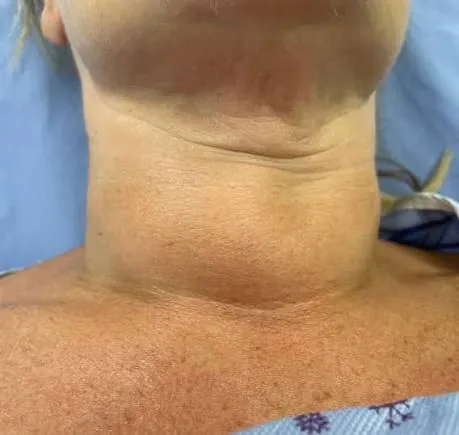
Multinodular goiter is an enlarged thyroid gland that holds several lumps, or nodules. This goiter may leave hormone levels normal, or it may turn overactive when a nodule starts making hormone on its own. Goiter treatment in Lahore with Dr. Rizwan Niazi runs from watchful monitoring and medicine to radioactive iodine or surgery when a gland needs more.
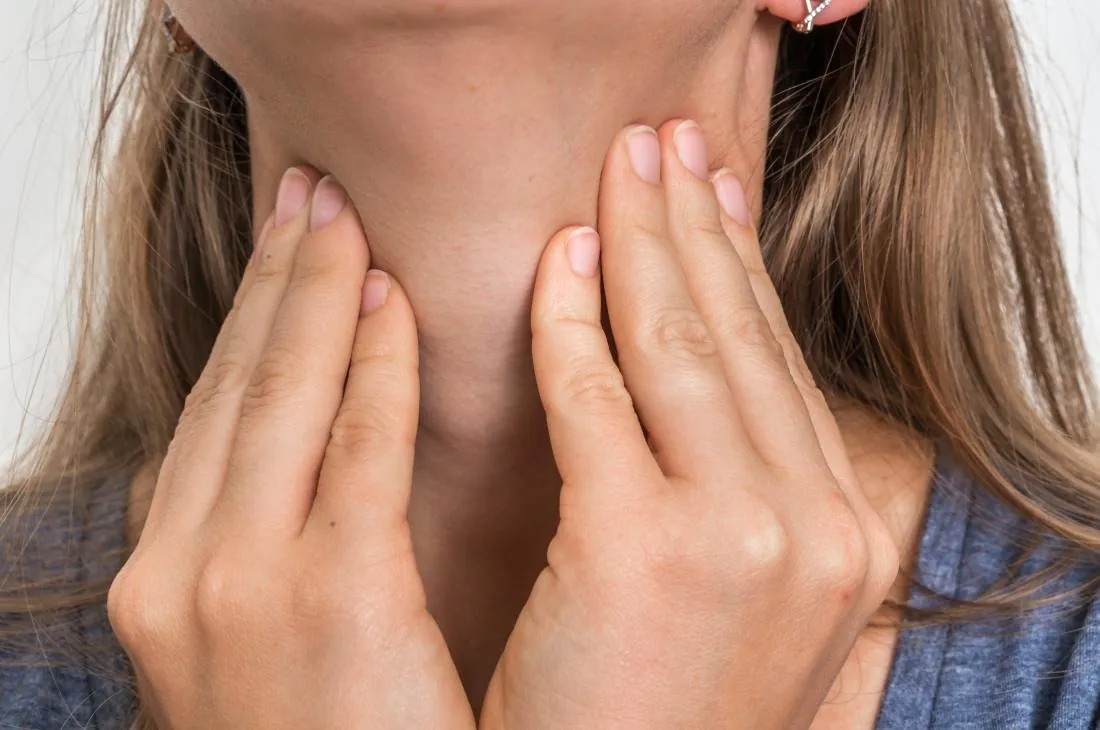
گلہڑ، تھائیرائیڈ کا بڑھنا (گردن میں گلٹی یا سوجن)
اگر گردن کے سامنے سوجن ہو، نگلنے میں تکلیف ہو، یا آواز بدل گئی ہو، تو یہ تھائیرائیڈ کا بڑھنا ہو سکتا ہے۔ الٹراساؤنڈ اور خون کا ٹیسٹ تشخیص کے لیے ضروری ہیں۔ مکمل معائنہ اور علاج کے لیے ڈاکٹر رضوان نیازی سے رابطہ کریں۔
Symptoms of Multinodular Goiter
Many small goiters cause no symptoms at all, and the signs below appear as the gland grows or a nodule turns overactive.
Neck and Pressure Symptoms
Visible neck swelling, tightness in the throat, trouble swallowing, a feeling of something stuck in the throat and a dry cough.
Voice and Breathing
Hoarseness, breathlessness when lying flat, noisy breathing on exertion, and waking at night unable to breathe comfortably.
If the Goiter Is Toxic
The nodules push hormone levels up. This causes palpitations, weight loss, sweating, trembling and poor sleep.
Iodine and Goiter in Pakistan
The thyroid enlarges when it does not get enough iodine to work efficiently, and the National Nutrition Survey 2018 found iodine deficiency in 17.5 percent of Pakistani women aged 15 to 49.
The survey measured iodine levels, not goiter itself. Autoimmune stimulation of the gland is the other common cause of a goiter. Source: National Nutrition Survey 2018 key findings.
How Multinodular Goiter Is Diagnosed
A neck examination, TSH, T3 and T4 blood tests and a thyroid ultrasound give the full picture, and a fine needle aspiration is added only if a nodule looks suspicious.
The examination checks the size and feel of the gland, the lymph nodes and any pressure on nearby structures. The blood tests show whether the goiter is toxic or non-toxic, and the ultrasound maps the size, number and features of every nodule.
The vast majority of thyroid nodules are benign. When one has suspicious features on ultrasound, Dr. Rizwan arranges the fine needle aspiration with labs in Lahore.
Multinodular Goiter Treatment in Lahore: Monitoring, Medicine or Surgery
Small goiters with normal hormone levels and no pressure symptoms are often monitored, and medicine, radioactive iodine or surgery are for overactive or large goiters.
Watch and Wait
An ultrasound every 1 to 2 years to track size, with periodic blood tests of thyroid function.
Hormone Medication
Steadies thyroid function and may slow further growth, though it does not much shrink a goiter that is already large.
Radioactive Iodine or Surgery
Radioactive iodine reduces size and overactivity in a toxic goiter; surgery suits large goiters with pressure symptoms or suspicious nodules.
Some neck swellings need surgery, and many goiters can be safely watched. When surgery is the right step, Dr. Rizwan arranges it with experienced thyroid surgeons and follows you up afterwards.
Book Goiter Treatment in Lahore
Any neck swelling is worth a visit: message on WhatsApp or call, bring any ultrasound report you have, and come Mon to Sat, by appointment.
Book a consultation with Dr. Rizwan Niazi
Send a WhatsApp message or call the clinic to choose a time.
Related pages
What Our Patients Say
I have been taking services from Dr. Rizwan Niazi for the past four months, and I am truly very satisfied. I was struggling with obesity, but Dr. Rizwan guided me properly and helped me a lot throughout my weight loss journey. His support, guidance, and professionalism made a big difference for me.
I genuinely recommend that if anyone is struggling with obesity or wants to lose weight in a healthy way, they should definitely consult Dr. Rizwan Niazi. This review is completely heartfelt and based on my personal experience.
Best doctor! I really loved meeting her. It’s been 3 months, and the weight issue that was my biggest concern has been resolved. Along with that, all my other problems have improved as well. I have lost 12 kg, very comfortably and without feeling stressed. She listens to everything very patiently and carefully, and makes you feel completely satisfied and reassured. I’m genuinely very happy with my experience.
Dr. Rizwan’s treatment for diabetes is excellent. Under his care, my weight dropped from 129kg to 92.4kg in just a few months. He is the best doctor in town and very friendly. I highly recommend him!
I visited Dr. Rizwan Niazi for weight loss and honestly had a very good experience. He explained everything clearly and guided me step by step. The results have been great so far. In my opinion, he is one of the best weight loss doctors in Pakistan.
I consulted Dr. Rizwan for thyroid issues after struggling for a long time. He identified the problem quickly and adjusted my treatment properly. I'm feeling much better now. A truly professional doctor and one of the best endocrinologists in Pakistan.
Dr. Rizwan is truly doing remarkable work. Managing diabetes and obesity is never easy, but his expertise and care make a real difference. Highly recommended for anyone looking for trusted guidance.
Good doctor who understood my issues and gave me the best treatment options. Very cooperative doctor.
Alhumdulillah good feedbacka very cooperative doctor and my Diabetes complete finished thanks doctor Rizwan Niazi and diabesity solutions