
MALE HORMONE SPECIALIST – DHA LAHORE
Specialist diagnosis and hormone-based treatment for enlarged breast tissue in men, at DHA Lahore.
گائنیکومیسٹیا مردوں میں ہارمونل عدم توازن کی وجہ سے چھاتی کے ٹشو کا بڑھنا ہے۔ ڈاکٹر رضوان نیازی خون کے ٹیسٹ سے وجہ معلوم کرکے علاج تجویز کرتے ہیں۔ بہت سے کیسز میں آپریشن کے بغیر علاج ممکن ہے۔
Gynecomastia is the enlargement of glandular breast tissue in males due to an imbalance between oestrogen and testosterone. It is different from pseudogynecomastia, which is fat accumulation in the chest from being overweight.
True gynecomastia involves actual glandular tissue growth driven by hormonal changes. Many cases can be managed medically without surgery when the hormonal cause is identified and treated early.
Diagnosis is confirmed through a physical examination and a hormone blood panel.
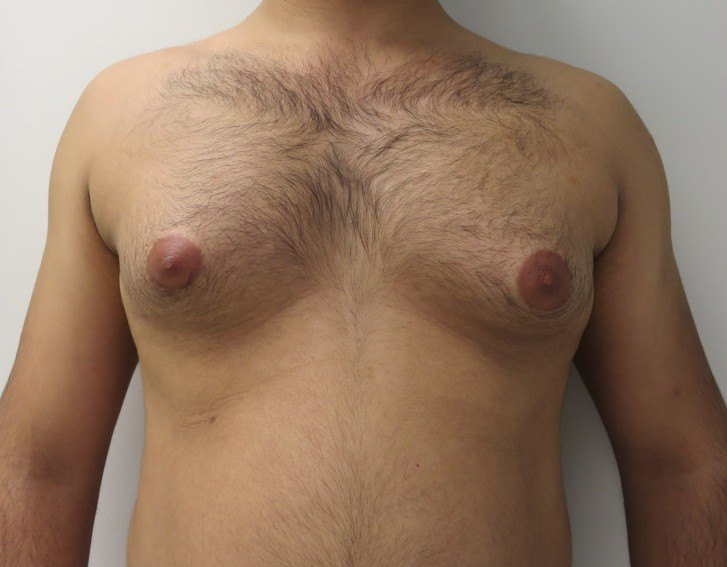
Identifying the cause is essential for choosing the right treatment approach.
Elevated oestrogen or reduced testosterone, including conditions like hypogonadism or adrenal disorders.
Anabolic steroids, anti-androgens, some antidepressants, and blood pressure medications can trigger gynecomastia.
Impaired liver or kidney function affects oestrogen metabolism, leading to hormonal changes that cause breast tissue growth.
Hormonal shifts during puberty and the natural decline in testosterone with age are both recognised triggers.
In many cases, yes. Medical treatment is effective when caught early and when a correctable hormonal cause is identified.
Hormonal medications can reduce glandular tissue in early or active gynecomastia. The approach depends on the underlying cause and duration.
Long-standing gynecomastia with significant fibrosis may not respond to medication. Surgical referral is discussed in these cases.
Where a drug is causing gynecomastia, changing or stopping that medication under supervision often resolves the condition.

An endocrinologist investigates the hormonal root cause rather than treating the visible tissue alone, leading to more complete and lasting resolution.
Testosterone, oestradiol, LH, FSH, prolactin, and thyroid markers are all reviewed to identify the specific hormonal imbalance.
All current medications are assessed for their potential role in causing or worsening gynecomastia.
Where medically appropriate, hormone correction or medication adjustment can resolve gynecomastia without surgical intervention.
Gynecomastia is caused by an imbalance between oestrogen and testosterone. Common causes include low testosterone, elevated oestrogen, certain medications, liver disease, and hormonal changes during puberty or ageing.
Gynecomastia can cause tenderness or sensitivity in the breast area, particularly in the early or active phase. Chronic gynecomastia that has been present for many years is usually painless.
Yes, in many cases. When caused by a correctable hormone imbalance or a medication that can be changed, medical treatment alone is often effective. Surgery is considered for long-standing cases where fibrous tissue has formed.
No. Gynecomastia involves growth of actual glandular breast tissue and is hormone-driven. Pseudogynecomastia is fat accumulation in the chest from being overweight. A physical examination confirms which is present.
An endocrinologist is the most appropriate specialist for gynecomastia, as the condition is hormonal in origin. Dr. Rizwan Niazi conducts a full hormone evaluation at his clinic in DHA Lahore.
Response to treatment depends on the underlying cause, duration, and degree of tissue change. Early cases often respond within a few months of correcting the hormone imbalance or changing the causative medication.
DHA LAHORE
Book a consultation with Dr. Rizwan Niazi for accurate diagnosis and a personalised treatment plan.
Suit# 154 CCA, DD, near Nadra office, Phase 4 Sector DD, DHA Phase 4, Lahore · Mon–Sat, by appointment