Graves' Thyroid Disease Treatment in Lahore
Graves' thyroid disease is an autoimmune condition in which antibodies push the thyroid to make too much hormone, and it is the most common cause of hyperthyroidism. This disease is confirmed by a TRAb blood test, and the same antibodies can also affect the eyes. With Dr. Rizwan Niazi, Graves' disease treatment in Lahore means TRAb levels checked throughout, the eyes assessed at every visit, and radioactive iodine only after an eye assessment.
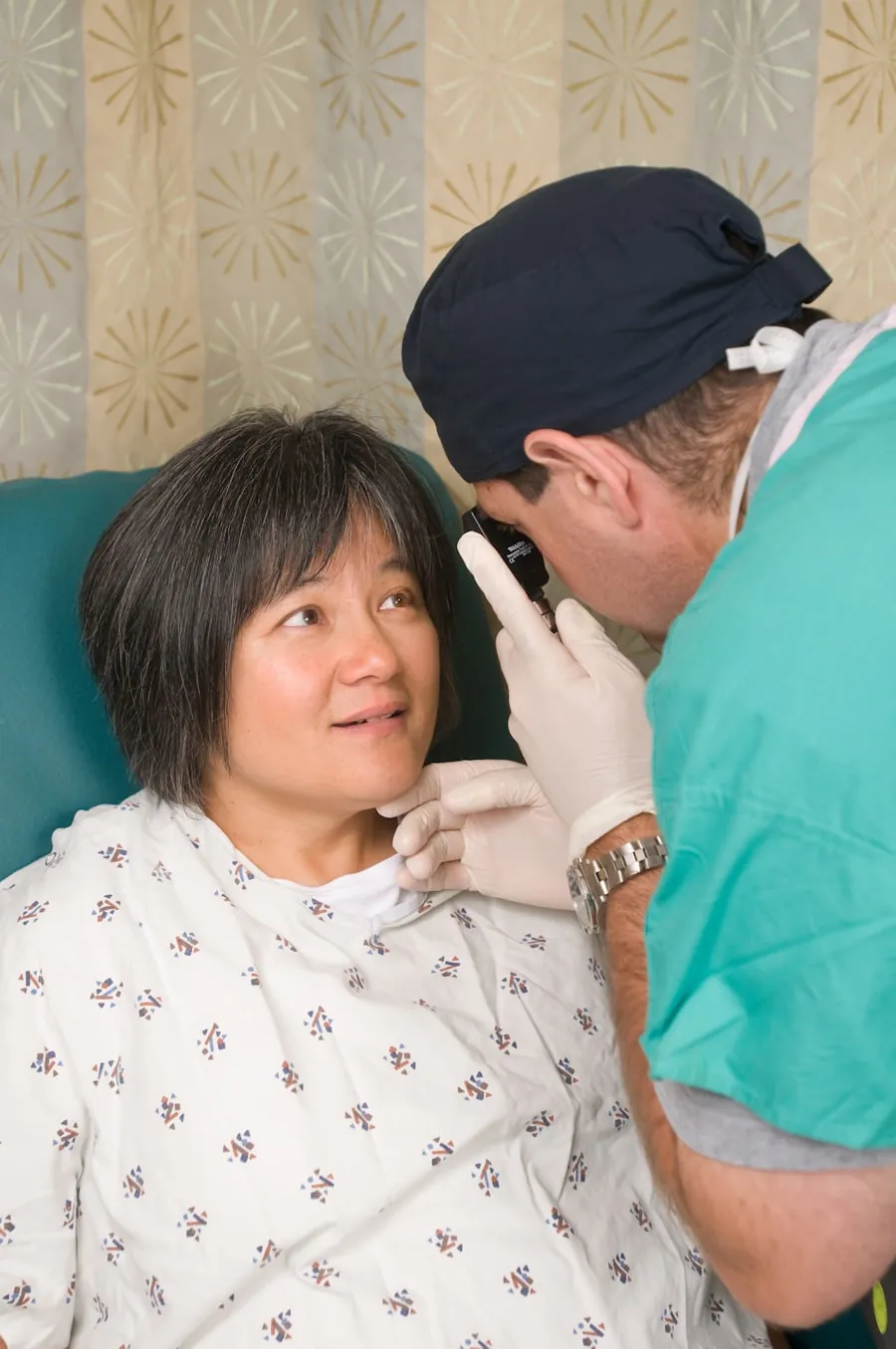
گریوز ڈیزیز، تھائیرائیڈ کی خود قوت مدافعت بیماری
گریوز ڈیزیز میں جسم کا مدافعتی نظام تھائیرائیڈ کو ضرورت سے زیادہ ہارمون بنانے پر مجبور کرتا ہے۔ اس سے دل کی تیز دھڑکن، وزن کم ہونا، اور بعض اوقات آنکھوں میں تبدیلیاں آ سکتی ہیں۔ یہ ایک قابل علاج بیماری ہے، بروقت تشخیص بہت ضروری ہے۔
Symptoms of Graves' Disease
On top of the usual overactive thyroid signs, Graves' disease has features of its own, and a few signs need urgent review.
Overactive Thyroid Signs
Weight loss, a racing heart, nervousness, trembling, feeling too hot and insomnia.
Features Specific to Graves'
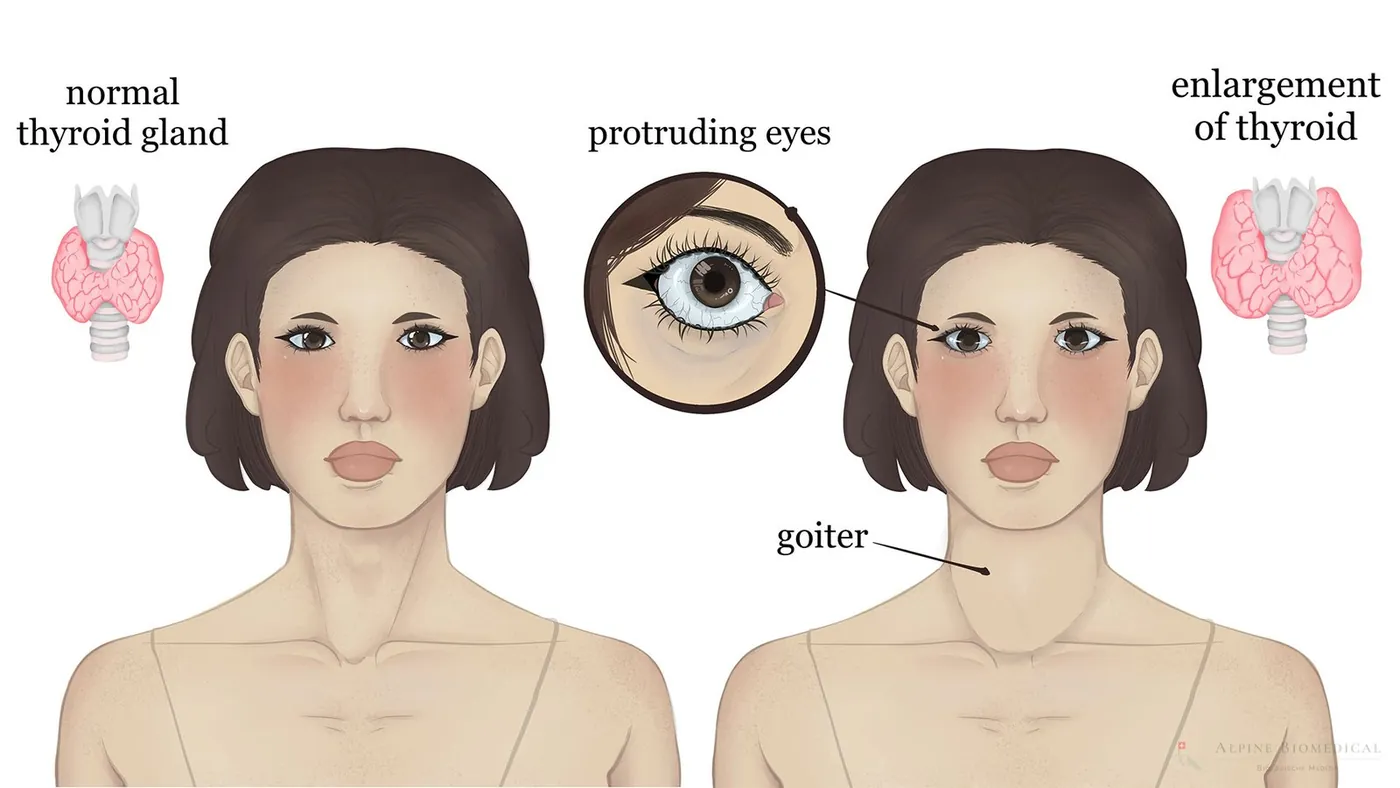
Eye irritation, puffiness or bulging, double vision, eyelids pulling back, a firm enlarged thyroid and skin thickening on the shins.
Seek urgent review if you have:
- an irregular heartbeat or chest pain
- a sudden change in vision
- an eye that turns red and painful
- an eye you cannot close fully
- a feeling that you are about to faint
How Graves' Disease Is Diagnosed
A low TSH with raised free T3 or T4 confirms an overactive thyroid, and a positive TRAb test confirms Graves' as the cause.
TRAb antibodies are what drives Graves' disease, and their level predicts both the chance of remission and the risk to the eyes. If the antibodies are borderline, a thyroid uptake scan separates diffuse Graves' overactivity from a toxic nodule.
Graves' Disease Treatment in Lahore: Tablets, Radioactive Iodine or Surgery
Tablets are usually tried first for 12 to 18 months and about half of patients go into remission, while radioactive iodine and surgery are permanent options.
Anti-Thyroid Tablets
They block hormone production; the TRAb level guides when to stop, and beta-blockers can ease heart symptoms meanwhile.
Radioactive Iodine
Very effective, but never used in pregnancy, and planned with extra care if eye disease is active.
Thyroid Surgery
An immediate, permanent result that suits a very large goiter, does not worsen Graves' eye disease and is arranged with thyroid surgeons in Lahore.
After radioactive iodine or surgery the gland usually ends up underactive, and a daily replacement tablet then takes over, the same care described under hypothyroidism treatment.
With careful management, most women with Graves' disease have healthy pregnancies. TRAb levels are watched closely in pregnancy because they can affect the baby's thyroid.
Graves' Disease and Your Eyes
Eye disease affects a minority of people with Graves', and it varies widely in how severe it is.
It can begin at any point around the thyroid diagnosis, even with normal hormone levels, and smoking makes it much worse. Report puffiness, gritty or watery eyes, double vision or any change in your sight straight away. The full picture is on the page for Graves' eye disease treatment in Lahore.
Book Graves' Disease Treatment in Lahore
Have your TRAb and thyroid results ready for the first visit, which you can book on WhatsApp or by phone, Mon to Sat, by appointment.
Book a consultation with Dr. Rizwan Niazi
Send a WhatsApp message or call the clinic to choose a time.
What Our Patients Say
I have been taking services from Dr. Rizwan Niazi for the past four months, and I am truly very satisfied. I was struggling with obesity, but Dr. Rizwan guided me properly and helped me a lot throughout my weight loss journey. His support, guidance, and professionalism made a big difference for me.
I genuinely recommend that if anyone is struggling with obesity or wants to lose weight in a healthy way, they should definitely consult Dr. Rizwan Niazi. This review is completely heartfelt and based on my personal experience.
Best doctor! I really loved meeting her. It’s been 3 months, and the weight issue that was my biggest concern has been resolved. Along with that, all my other problems have improved as well. I have lost 12 kg, very comfortably and without feeling stressed. She listens to everything very patiently and carefully, and makes you feel completely satisfied and reassured. I’m genuinely very happy with my experience.
Dr. Rizwan’s treatment for diabetes is excellent. Under his care, my weight dropped from 129kg to 92.4kg in just a few months. He is the best doctor in town and very friendly. I highly recommend him!
I visited Dr. Rizwan Niazi for weight loss and honestly had a very good experience. He explained everything clearly and guided me step by step. The results have been great so far. In my opinion, he is one of the best weight loss doctors in Pakistan.
I consulted Dr. Rizwan for thyroid issues after struggling for a long time. He identified the problem quickly and adjusted my treatment properly. I'm feeling much better now. A truly professional doctor and one of the best endocrinologists in Pakistan.
Dr. Rizwan is truly doing remarkable work. Managing diabetes and obesity is never easy, but his expertise and care make a real difference. Highly recommended for anyone looking for trusted guidance.
Good doctor who understood my issues and gave me the best treatment options. Very cooperative doctor.
Alhumdulillah good feedbacka very cooperative doctor and my Diabetes complete finished thanks doctor Rizwan Niazi and diabesity solutions