PCOS Acne: Why Hormones Cause Breakouts and What Helps
This: PCOS acne is commonly driven by hormone changes, especially excess androgens and sometimes by insulin resistance, so treatment usually pairs standard.
Hormonal acne treatment in Lahore is for adult women whose jaw and chin acne keeps returning, and consultant endocrinologist Dr. Rizwan Niazi offers it at Diabesity Solutions. This assessment begins once creams and antibiotics have failed to settle the skin, with androgen tests that include 17-OHP to tell PCOS apart from an adrenal cause. Its treatment then targets whichever the tests show: PCOS, adrenal androgen excess or insulin resistance.
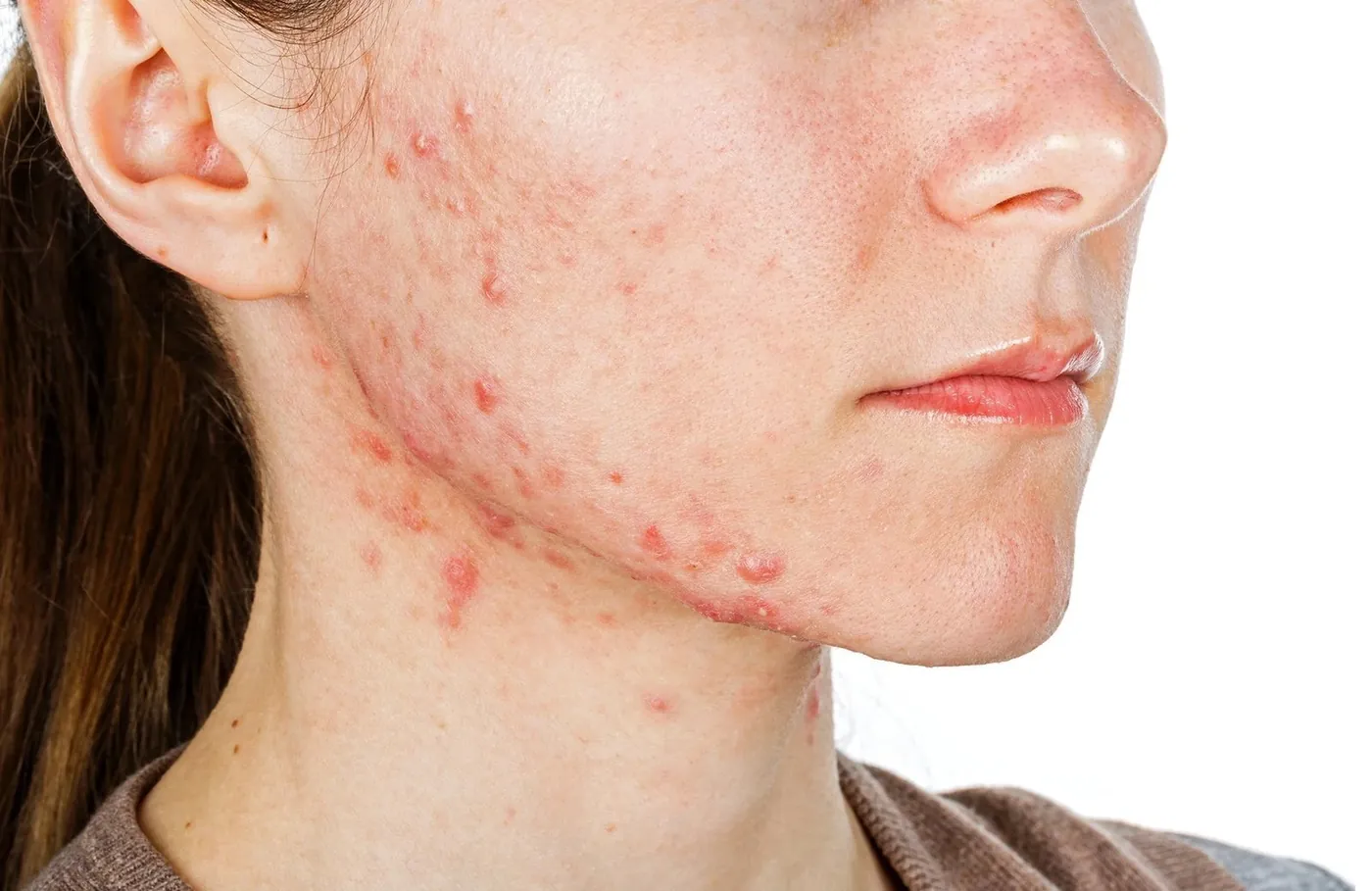
خواتین میں مستقل کیل مہاسے اکثر ہارمونل وجوہات سے ہوتے ہیں، خاص طور پر پی سی او ایس اور اینڈروجن کی زیادتی۔ ڈاکٹر رضوان نیازی خون کے ٹیسٹ سے اصل وجہ معلوم کرکے علاج تجویز کرتے ہیں۔

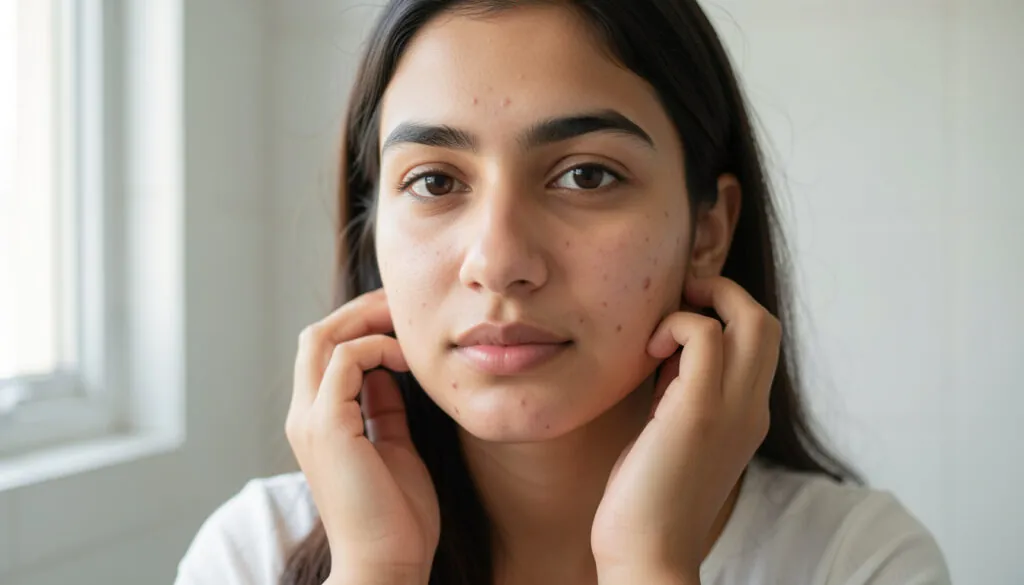
Acne that flares in the week before a period and sits on the jaw, chin and neck points to a hormonal cause; acne on the forehead and nose is more often the ordinary comedonal kind.
The flare comes in the second half of the cycle, when oestrogen falls in relation to progesterone and androgen activity rises. Androgens make the oil glands produce more sebum, which blocks pores and inflames them. In adult women this kind of acne tends to last, unlike teenage acne.
Other signs often come with hormonal acne: irregular periods, excess facial hair, thinning scalp hair and weight gain.
PCOS is the most common hormonal cause; adrenal androgen excess, late-onset congenital adrenal hyperplasia and insulin resistance are the others, and thyroid problems play only an indirect part.
PCOS raises androgens, and more androgen means more oil and worse acne. The adrenal glands can also make too much DHEAS on their own, apart from the ovaries, and a DHEAS test picks this up.
Late-onset congenital adrenal hyperplasia appears in adulthood and can look just like PCOS. High insulin pushes the ovaries to make more androgens. An underactive thyroid can make the skin oilier and slow skin cell turnover, but androgens remain the main driver for most women.
The tests are total and free testosterone, DHEAS, SHBG, 17-OHP, LH, FSH, oestradiol, prolactin, fasting insulin and thyroid function, with a pelvic ultrasound when PCOS is likely.
Androgen and insulin markers, LH, FSH and the scan are read as one set to confirm or rule out PCOS, and the panel as a whole guides which treatment fits.
In most women, treating the cause brings a clear and lasting improvement, and the full benefit usually shows over three to six months.
Anti-androgen therapy is one route; the others treat PCOS or the adrenal glands directly, or bring insulin resistance under control. Treating the source gives a fuller and longer-lasting result than creams alone. Follow-up visits check the skin and the blood results together until the improvement holds.
This: PCOS acne is commonly driven by hormone changes, especially excess androgens and sometimes by insulin resistance, so treatment usually pairs standard.
I have been taking services from Dr. Rizwan Niazi for the past four months, and I am truly very satisfied. I was struggling with obesity, but Dr. Rizwan guided me properly and helped me a lot throughout my weight loss journey. His support, guidance, and professionalism made a big difference for me.
I genuinely recommend that if anyone is struggling with obesity or wants to lose weight in a healthy way, they should definitely consult Dr. Rizwan Niazi. This review is completely heartfelt and based on my personal experience.
Best doctor! I really loved meeting her. It’s been 3 months, and the weight issue that was my biggest concern has been resolved. Along with that, all my other problems have improved as well. I have lost 12 kg, very comfortably and without feeling stressed. She listens to everything very patiently and carefully, and makes you feel completely satisfied and reassured. I’m genuinely very happy with my experience.
Dr. Rizwan’s treatment for diabetes is excellent. Under his care, my weight dropped from 129kg to 92.4kg in just a few months. He is the best doctor in town and very friendly. I highly recommend him!
I visited Dr. Rizwan Niazi for weight loss and honestly had a very good experience. He explained everything clearly and guided me step by step. The results have been great so far. In my opinion, he is one of the best weight loss doctors in Pakistan.
I consulted Dr. Rizwan for thyroid issues after struggling for a long time. He identified the problem quickly and adjusted my treatment properly. I'm feeling much better now. A truly professional doctor and one of the best endocrinologists in Pakistan.
Dr. Rizwan is truly doing remarkable work. Managing diabetes and obesity is never easy, but his expertise and care make a real difference. Highly recommended for anyone looking for trusted guidance.
Good doctor who understood my issues and gave me the best treatment options. Very cooperative doctor.
Alhumdulillah good feedbacka very cooperative doctor and my Diabetes complete finished thanks doctor Rizwan Niazi and diabesity solutions
Book a consultation with Dr. Rizwan Niazi
Send a WhatsApp message or call the clinic to choose a time.