
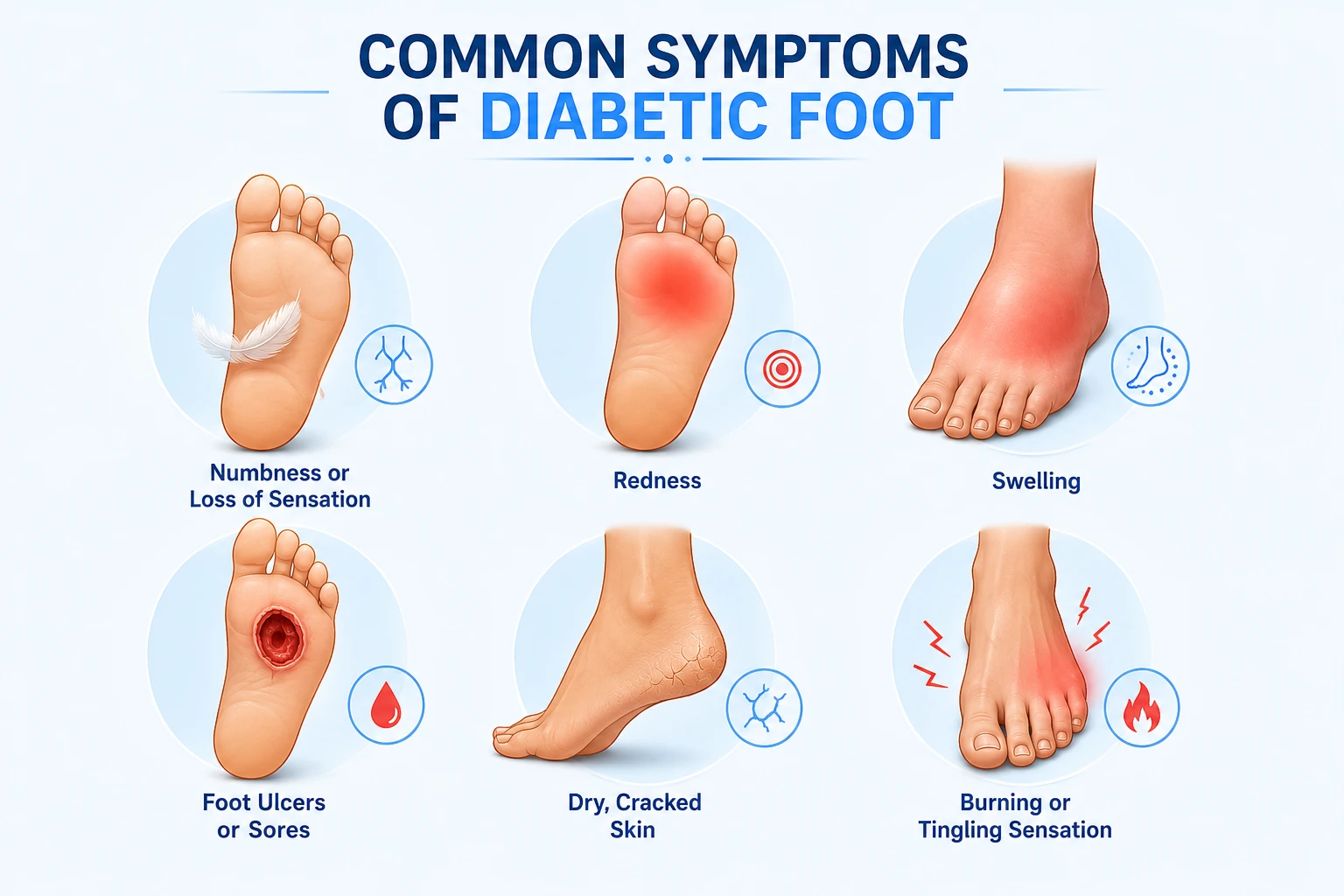
DIABETIC FOOT CARE – DHA LAHORE Specialist care for the diabetic foot in DHA Lahore, where nerve damage and poor blood flow can lead to numbness, ulcers and infection. Early checks help protect your feet and prevent serious problems. ذیابیطس پاؤں کے اعصاب اور خون کی رگوں کو نقصان پہنچا سکتی ہے، جس سے پاؤں سُن ہو جاتے ہیں، زخم بن جاتے ہیں اور انفیکشن دیر سے ٹھیک ہوتا ہے۔ اگر بروقت علاج نہ ہو تو پاؤں کاٹنے تک کی نوبت آ سکتی ہے۔ ڈاکٹر رضوان نیازی پاؤں کا باقاعدہ معائنہ کرتے ہیں اور خون میں شکر کو قابو میں رکھتے ہیں تاکہ مسائل ابتدائی مرحلے میں پکڑے جا سکیں۔ بہتر علاج کے لیے ماہرِ غدود سے رجوع کریں۔ Diabetic foot describes the foot problems that develop when long-standing high blood sugar damages the nerves and the blood vessels that supply the feet. Nerve damage means you may not feel a small cut, blister or pressure sore, while poor blood flow means any wound is slow to heal, allowing ulcers and infection to take hold. Left unchecked, a minor wound can turn into a serious infection that, in the worst cases, leads to amputation. The good news is that almost all of this is preventable. Dr. Rizwan Niazi carries out regular foot checks, treats problems early and controls the blood sugar that drives the damage, so your feet stay safe. SIGNS & SYMPTOMS Because nerve damage dulls pain, diabetic foot problems are easy to miss. Knowing the warning signs helps you act before a wound becomes serious. Loss of feeling, tingling or a pins-and-needles sensation means you may not notice an injury. Cuts, blisters or sores that are slow to heal are an early warning of poor blood flow. Open sores, often on the sole or toes, can develop and become infected if not treated. Warmth, redness or swelling in part of the foot can signal an infection underneath. Dry, cracked skin, calluses or thickened nails make the skin more likely to break. Persistently cold feet or weak pulses suggest reduced blood supply to the foot. WARNING SIGNS This chart shows the everyday signs to watch for, from numbness and slow-healing cuts to ulcers, so problems are caught and treated early. RISK FACTORS The longer and less controlled your diabetes, the higher the risk to your feet. Managing these factors keeps your feet healthy. Persistently high blood sugar damages the nerves and vessels that protect your feet. Reduced feeling means small injuries go unnoticed until they become serious. Narrowed blood vessels slow healing and starve wounds of the blood they need. Smoking narrows blood vessels further and greatly raises the risk of foot complications. Bunions, calluses or ill-fitting shoes create pressure points where ulcers form. The longer you have had diabetes, the greater the chance of foot problems. DIAGNOSIS & TREATMENT Management combines regular foot checks with prompt treatment of wounds and tight control of the diabetes behind it. Routine examination of the feet finds nerve damage, poor circulation and early wounds before they worsen. Ulcers and infections are treated promptly to protect the foot and prevent serious complications. Tight control of blood sugar, blood pressure and cholesterol improves healing and slows further damage. Diabetic foot problems are largely preventable when caught early. Book a consultation with Dr. Rizwan Niazi in DHA Lahore and have your feet checked. Most diabetes care stops at blood sugar and leaves foot problems to develop unnoticed. Dr. Rizwan Niazi checks your feet, treats wounds early and controls the root causes, so small problems never become serious ones. Your feet are examined for nerve damage, circulation and early wounds at your consultation. Blood sugar, blood pressure and cholesterol are managed together to keep your feet healthy. Fast, clear referral for wound care or vascular treatment whenever it is needed. If you have diabetes and have not had your feet checked recently, it is worth doing, even with no symptoms. Message the clinic and we will arrange it with your consultation. A diabetic foot refers to the foot problems caused by diabetes, where high blood sugar damages the nerves and blood vessels in the feet. This can lead to numbness, ulcers, infections and slow healing, which is why regular foot checks matter so much. Early signs include numbness or tingling, dry or cracked skin, slow-healing cuts and blisters, redness or swelling, and cold feet. Because nerve damage dulls pain, these are easy to miss without a regular check. Nerve damage means injuries go unnoticed, while poor blood flow stops wounds healing. A small sore can become a deep infection and, if untreated, may lead to amputation. Caught early, almost all of this is preventable. Most people with diabetes should have a foot check at least once a year, and more often if numbness, wounds or circulation problems are found. Dr. Rizwan Niazi will advise the right interval for you. Yes. Caught early, ulcers and infections respond well to wound care, pressure relief and good blood sugar control. Dr. Rizwan treats foot problems promptly and arranges timely referral when specialist wound or vascular care is needed. Check your feet daily for cuts and blisters, keep skin clean and moisturised, wear well-fitting shoes, never walk barefoot, and keep your blood sugar well controlled. Report any wound that is slow to heal without delay.
Diabetic Foot
Treatment in Lahore | Dr. Rizwan Niazi
ذیابیطس کے سبب پاؤں کی بیماری (ذیابیطسی فٹ)
What Is Diabetic Foot?
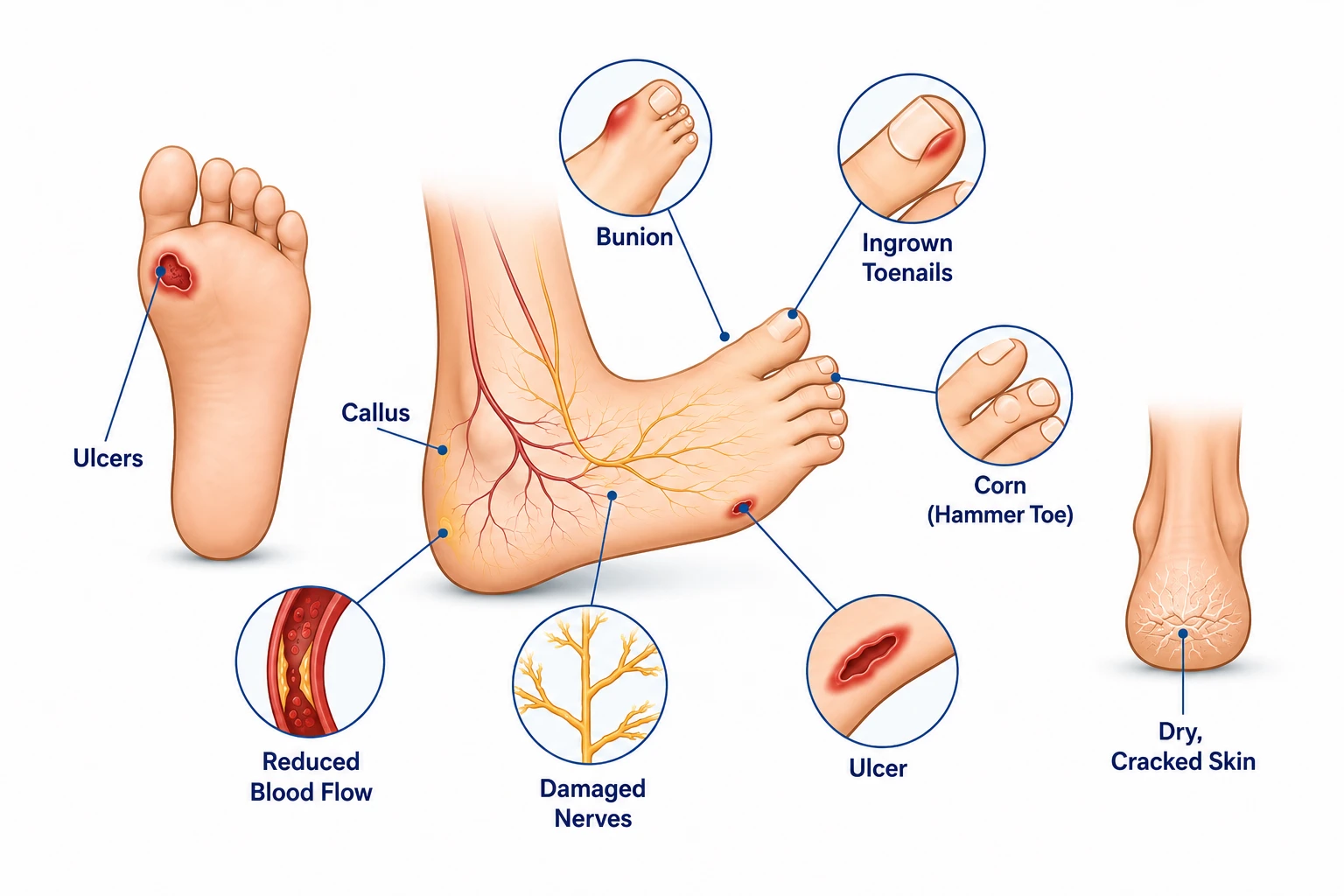
Symptoms of Diabetic Foot
🦶
Numbness & Tingling
🩹
Slow-Healing Wounds
🦠
Ulcers & Open Sores
🔥
Redness, Warmth & Swelling
🦵
Changes in Skin & Nails
🥶
Cold or Numb Feet
Common Symptoms of Diabetic Foot
What Raises Your Risk?
🩸
High Blood Sugar
🦶
Nerve Damage (Neuropathy)
🫀
Poor Circulation
🚬
Smoking
👟
Foot Deformities & Pressure
⏳
Long Duration of Diabetes
How Diabetic Foot Is Managed
🔍
Regular Foot Checks
🩹
Wound & Infection Care
🩸
Blood Sugar Control
Protect Your Feet Before Problems Start

Why See Dr. Rizwan Niazi for Diabetic Foot?
🦶
Thorough Foot Checks
🩸
Root-Cause Control
🤝
Timely Referral
Living With Diabetes? Get Your Feet Checked
Frequently Asked Questions
What is a diabetic foot?
What are the early signs of a diabetic foot problem?
Why are diabetic foot problems so serious?
How often should I have my feet checked?
Can a diabetic foot ulcer be treated?
How can I prevent diabetic foot problems at home?
Related Diabetes Care Services