
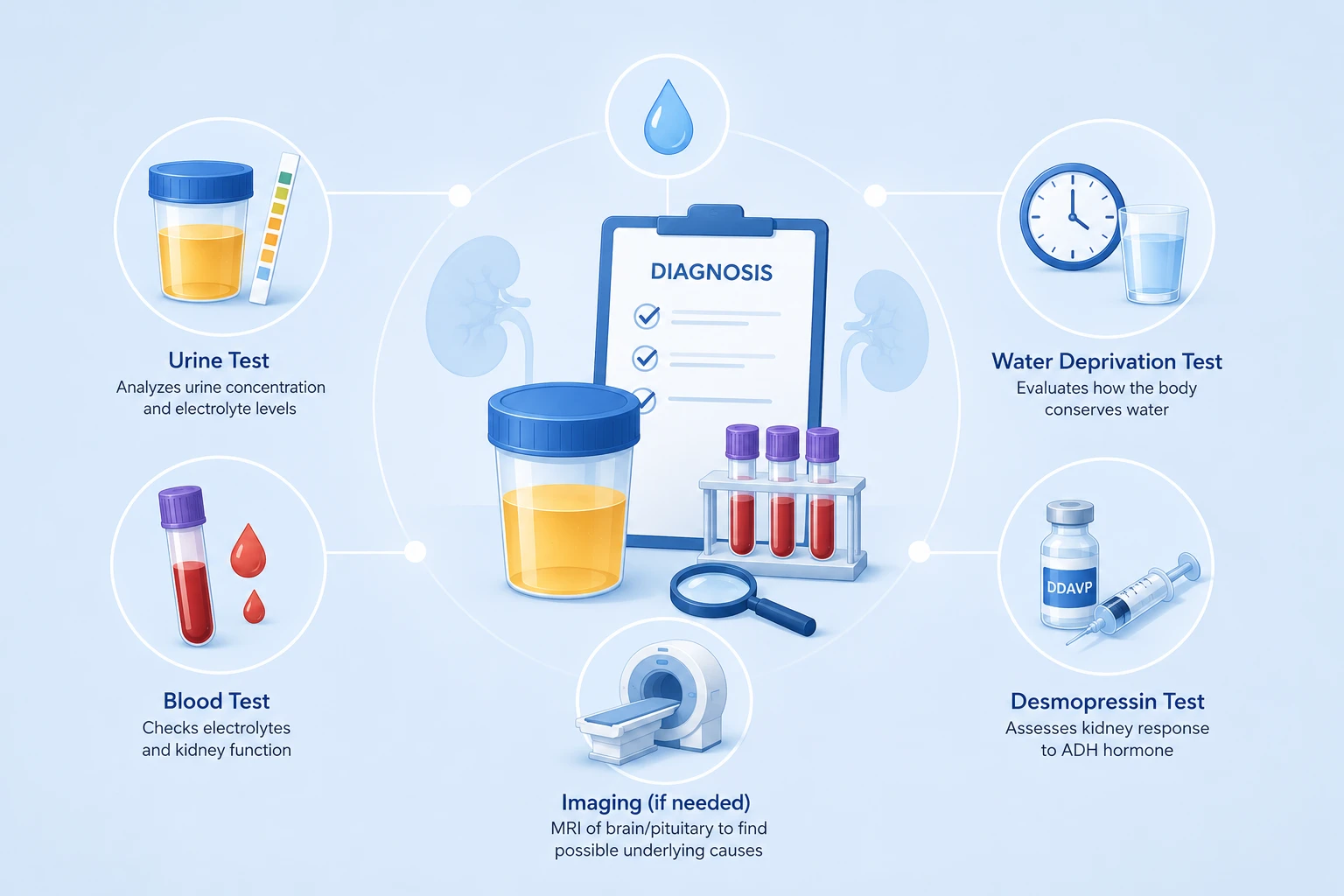
DIABETES INSIPIDUS CARE – DHA LAHORE Specialist care for diabetes insipidus in DHA Lahore. Diabetes insipidus is a water-balance disorder, not sugar diabetes, and Dr. Rizwan Niazi treats the hormone problem behind your extreme thirst and excessive urination. ذیابیطس انسپیڈس شوگر کی ذیابیطس نہیں، بلکہ جسم میں پانی کے توازن کی خرابی ہے۔ یہ ای ڈی ایچ (ویسوپریسن) نامی ہارمون کی کمی یا گردوں کے ردعمل نہ کرنے سے ہوتی ہے، جس سے شدید پیاس اور بار بار پتلا پیشاب آتا ہے۔ ڈاکٹر رضوان نیازی اس کی درست تشخیص اور علاج فراہم کرتے ہیں۔ بہتر علاج کے لیے ماہرِ غدود سے رجوع کریں۔ Diabetes insipidus is a water-balance disorder, and it is important to know that it is not the same as sugar diabetes (diabetes mellitus). The two share a name only because both can cause increased urination. In diabetes insipidus, the body cannot properly control how much water it holds on to, so it passes very large volumes of dilute urine and you feel constantly, intensely thirsty. The problem lies with a hormone called ADH, also known as vasopressin, which normally tells the kidneys to conserve water. When the body makes too little ADH, or when the kidneys do not respond to it, water is lost instead of being reabsorbed. Dr. Rizwan Niazi diagnoses the exact cause and provides treatment to restore your fluid balance, ease the thirst and protect your health. SIGNS & SYMPTOMS The hallmark of diabetes insipidus is overwhelming thirst paired with passing large amounts of pale, watery urine. These are the signs to watch for. An intense, constant thirst that is hard to satisfy, often craving cold water, is the classic sign. Passing very large volumes of pale, watery urine, day and night, is a defining feature. Needing to get up many times in the night to pass urine, which disturbs your sleep. Dry mouth, dry skin and feeling weak or dizzy can occur when fluid loss outpaces drinking. Constant thirst, broken sleep and dehydration leave you fatigued and low on energy. In children, diabetes insipidus may show up as bedwetting, heavy wet nappies and irritability. DISEASE TYPES This infographic compares the main types of diabetes insipidus, showing whether the problem is with the ADH hormone in the brain or with the kidneys’ response. TYPES & CAUSES Diabetes insipidus is grouped by where the problem lies, with the ADH hormone itself or with the kidneys. Knowing the type guides the right treatment. The brain makes too little ADH, often after injury, surgery or a problem with the pituitary gland. The kidneys do not respond to ADH properly, so water is lost despite normal hormone levels. Some long-term medicines can affect how the kidneys handle water and trigger symptoms. A rare genetic form can run in families and tends to appear early in life. An uncommon type can develop during pregnancy and usually settles after delivery. Disturbed sodium, potassium or calcium levels can disrupt how the kidneys conserve water. GETTING A DIAGNOSIS This diagram outlines how diabetes insipidus is diagnosed, from urine and blood tests to a water deprivation test that pinpoints the exact cause. DIAGNOSIS & TREATMENT Treatment is tailored to the type of diabetes insipidus, with the goal of restoring fluid balance and ending the relentless thirst. Careful testing confirms diabetes insipidus and identifies whether the cause is in the brain or kidneys. Treatment replaces the missing hormone or addresses the kidney response, so water is conserved again. Regular review of fluids, salts and symptoms keeps the condition stable and you feeling well. Diabetes insipidus is very treatable once the cause is found. Book a consultation with Dr. Rizwan Niazi in DHA Lahore and get your fluid balance back under control. Diabetes insipidus is often confused with sugar diabetes and missed for months. Dr. Rizwan Niazi is a hormone specialist who recognises it quickly, finds the exact cause and treats the ADH problem at its root, so the thirst finally settles. As an endocrinologist, Dr. Rizwan understands the ADH hormone behind diabetes insipidus. Careful testing separates diabetes insipidus from sugar diabetes and pinpoints the type. A treatment plan matched to your type restores fluid balance and eases the thirst. If you are drinking and urinating far more than usual, it may not be sugar diabetes. Message the clinic and Dr. Rizwan Niazi will arrange the right tests to find out why. No. Despite the shared name, diabetes insipidus is a water-balance disorder caused by a problem with the ADH hormone or the kidneys, not by high blood sugar. The two are completely different conditions, though both can cause increased urination. The two classic symptoms are extreme, constant thirst and passing very large volumes of pale, watery urine, including waking through the night to urinate. Tiredness and dehydration can follow if fluid loss is not replaced. It is diagnosed with urine and blood tests and, where needed, a water deprivation test that checks how your body holds on to water. Dr. Rizwan Niazi uses these to confirm the diagnosis and identify the exact type. Yes. Once the type is known, treatment can restore fluid balance and greatly ease the thirst and excessive urination. Many people lead a normal life once the condition is well managed. It is caused either by the brain making too little ADH (central type) or by the kidneys not responding to ADH (nephrogenic type). Injury, pituitary problems, certain medicines, inherited causes and pregnancy can all play a part. With proper treatment it is well controlled and safe. The main risk is dehydration if large fluid losses are not replaced, which is exactly why prompt diagnosis and a clear management plan with Dr. Rizwan Niazi matter.
Diabetes Insipidus
Treatment in Lahore | Dr. Rizwan Niazi
ذیابیطس انسپیڈس (پانی کا عدم توازن)
What Is Diabetes Insipidus?
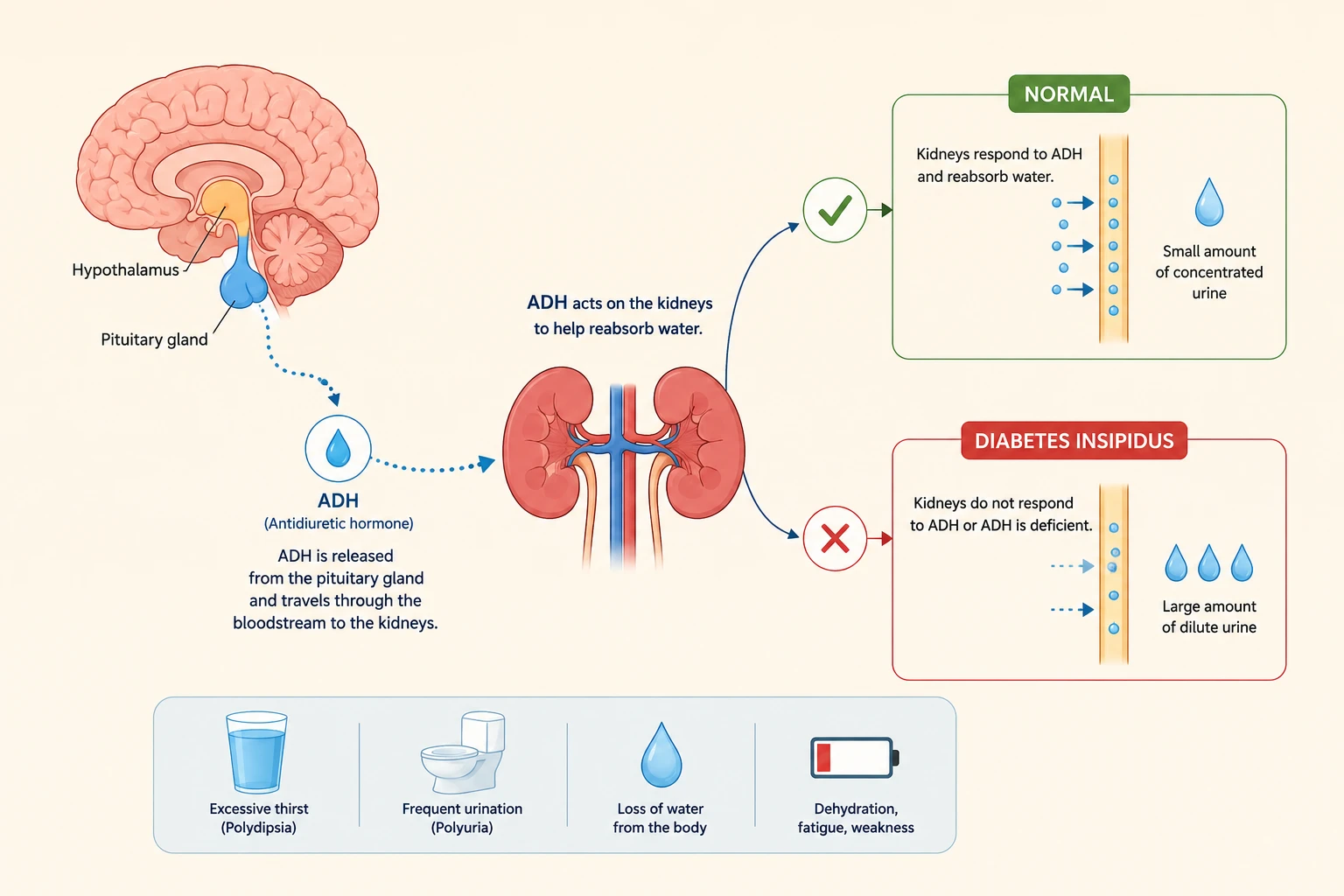
Symptoms of Diabetes Insipidus
💧
Extreme Thirst
🚽
Excessive Urination
🌙
Waking to Urinate
🏜️
Dehydration
😫
Tiredness & Weakness
🧒
Bedwetting in Children
Types of Diabetes Insipidus
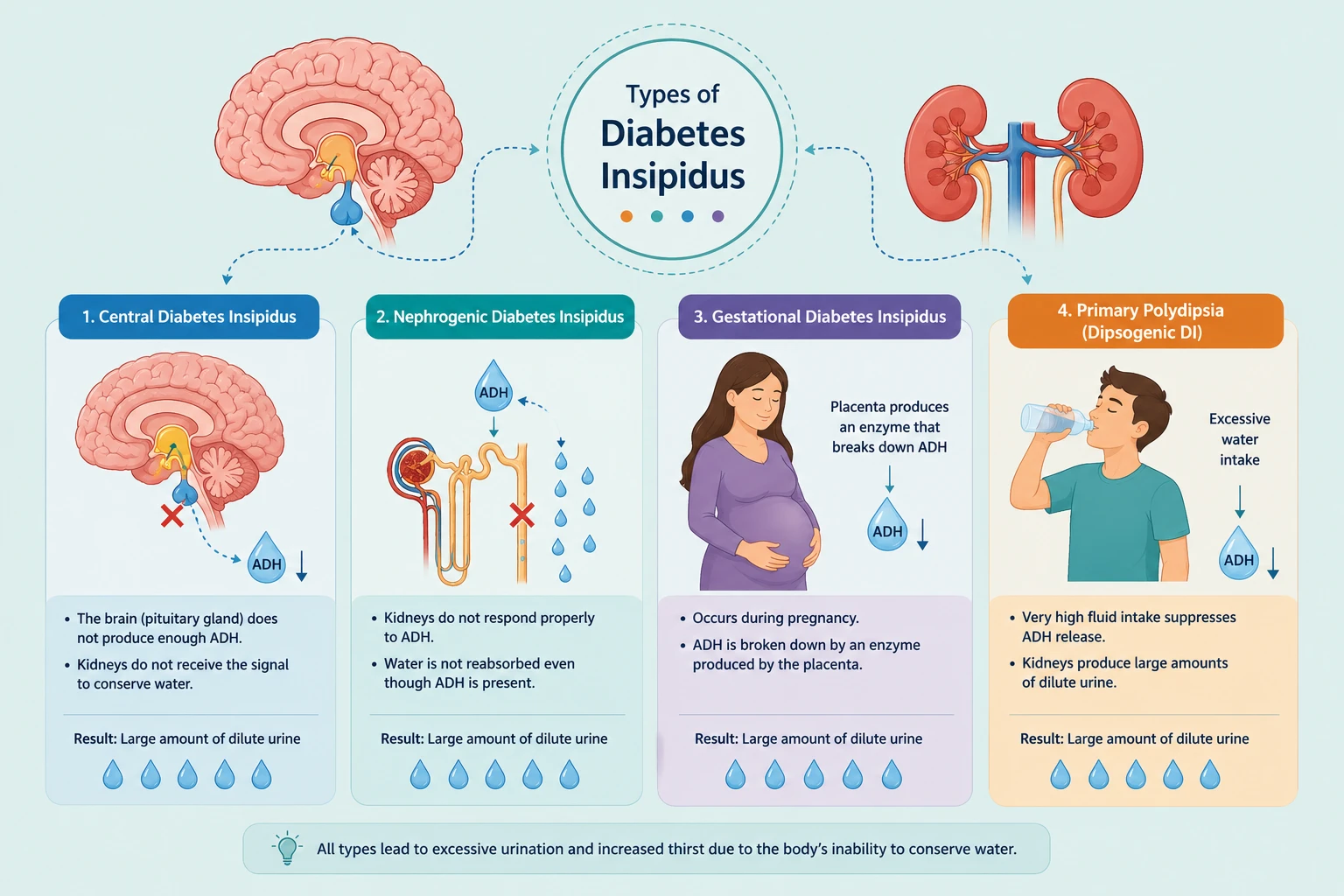
What Causes Diabetes Insipidus?
🧠
Central (Brain) Type
🫘
Nephrogenic (Kidney) Type
💊
Certain Medicines
🧬
Inherited Causes
🤱
Pregnancy-Related
🩸
Mineral Imbalance
How Diabetes Insipidus Is Diagnosed
How Diabetes Insipidus Is Managed
🔎
Accurate Diagnosis
💧
Restoring Fluid Balance
📋
Ongoing Monitoring
Stop the Constant Thirst and Frequent Urination

Why See Dr. Rizwan Niazi for Diabetes Insipidus?
🩺
Hormone Expertise
🔎
Correct Diagnosis
🤝
Tailored Treatment
Always Thirsty and Passing Lots of Urine?
Frequently Asked Questions
Is diabetes insipidus the same as sugar diabetes?
What are the main symptoms of diabetes insipidus?
How is diabetes insipidus diagnosed?
Can diabetes insipidus be treated?
What causes diabetes insipidus?
Is diabetes insipidus dangerous?
Related Diabetes Care Services