
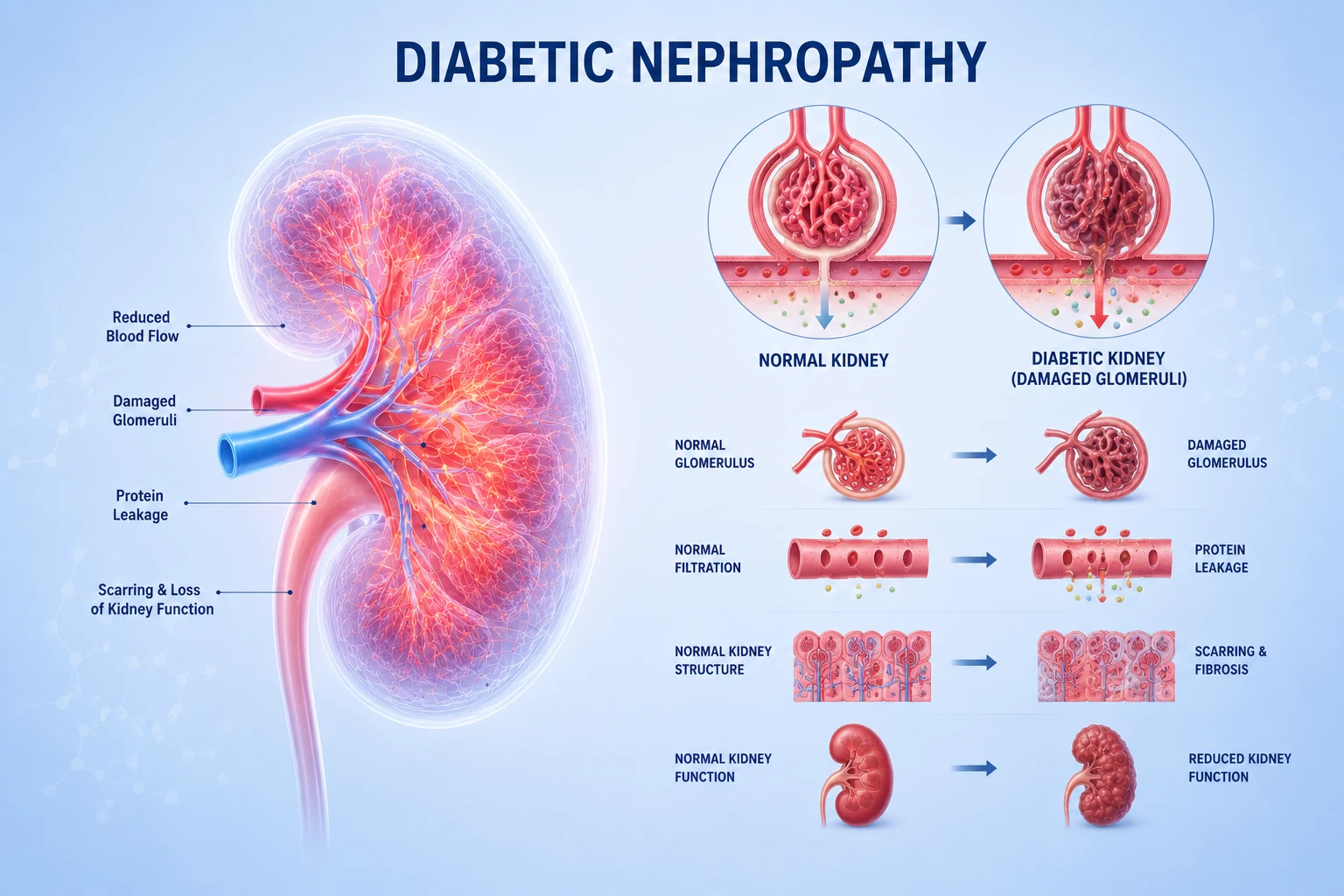
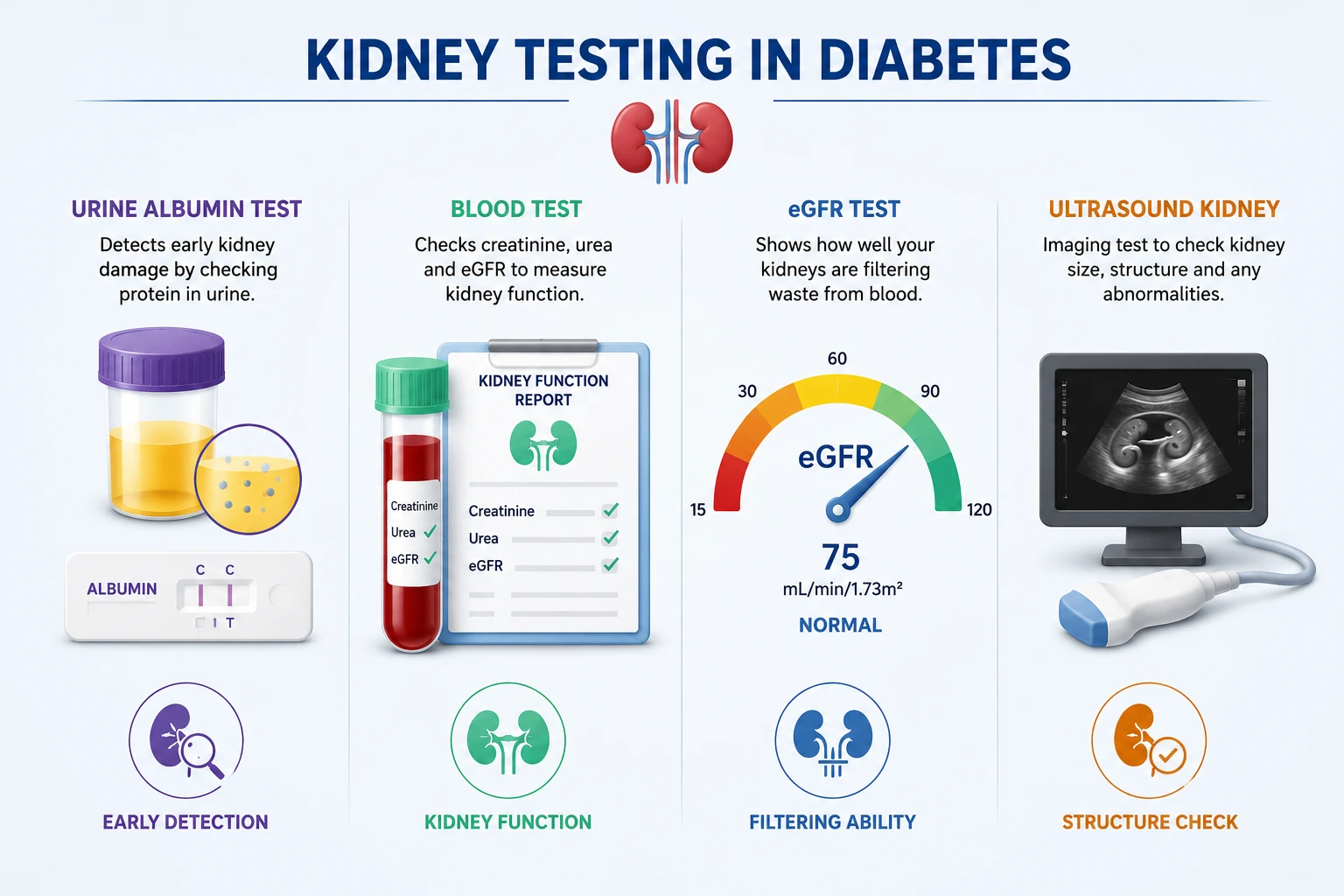
DIABETIC KIDNEY CARE – DHA LAHORE Specialist care for diabetic nephropathy in DHA Lahore, with simple urine and blood tests to catch diabetes-related kidney damage early, often before you feel any symptoms. ذیابیطس گردوں کی باریک رگوں کو نقصان پہنچا سکتی ہے جس سے پیشاب میں پروٹین آنے لگتی ہے اور گردوں کی کارکردگی کم ہوتی جاتی ہے، اور اکثر شروع میں کوئی علامت ظاہر نہیں ہوتی۔ ڈاکٹر رضوان نیازی سادہ پیشاب اور خون کے ٹیسٹ کے ذریعے بیماری کو ابتدائی مرحلے میں پکڑتے ہیں۔ بہتر علاج کے لیے ماہِر غدود سے رجوع کریں۔ Diabetic nephropathy is damage to the kidneys caused by long-standing high blood sugar. Over time, raised sugar and blood pressure harm the tiny filtering units in the kidneys, allowing protein to leak into the urine and slowly reducing how well the kidneys clean your blood. It is one of the most common causes of long-term kidney problems in people with diabetes. In the early stages it is usually silent, with no pain or obvious symptoms, which is why simple tests matter so much. Dr. Rizwan Niazi checks for the earliest sign, a small amount of protein in the urine, and manages the blood sugar, blood pressure and cholesterol that drive the disease, helping protect your kidney function for the long term. SIGNS & SYMPTOMS Early diabetic kidney disease is usually silent. When symptoms appear, the kidneys are often already strained, which is why testing matters. Persistently foamy or bubbly urine can be a sign that protein is leaking from the kidneys. Fluid build-up causing puffiness in the ankles, feet or legs is a common later sign. Feeling unusually tired or run down can occur as the kidneys work less efficiently. Reduced appetite or nausea may develop as waste products build up in the blood. Poor sleep, restless legs or itching can appear when kidney function declines. Needing to pass urine more often, especially at night, can be an early clue. KIDNEY TESTING A simple set of tests, urine albumin, a blood test, eGFR and ultrasound, can detect kidney damage early, when it is most treatable. RISK FACTORS The longer and less controlled your diabetes, the higher the risk. Managing these factors helps protect your kidneys. Persistently high blood sugar is the main driver of damage to the kidney filters. Raised blood pressure strains the kidneys and speeds up the loss of function. The longer you have had diabetes, the greater the chance of kidney damage. A family history of kidney disease or diabetes increases your personal risk. Smoking damages blood vessels and worsens diabetes-related kidney disease. High cholesterol harms blood vessels and adds to the strain on the kidneys. DIAGNOSIS & TREATMENT Management combines early detection through simple tests with tight control of the factors that drive the disease. Simple urine and blood tests find kidney damage before symptoms appear, when it is most treatable. Tight control of blood sugar, blood pressure and cholesterol slows or halts further kidney damage. Prompt referral to a kidney specialist when the kidneys need more than medical management. Diabetic nephropathy is far easier to control when caught early. Book a consultation with Dr. Rizwan Niazi in DHA Lahore and have your kidneys checked. Most diabetes care stops at blood sugar and leaves kidney checks to a separate visit. Dr. Rizwan Niazi tests for early kidney damage as part of your care and treats the root causes, so problems are caught and managed early. Simple urine and blood tests for kidney damage are part of your diabetes consultation. Blood sugar, blood pressure and cholesterol are managed together to protect your kidneys. Fast, clear referral to a kidney specialist whenever it is needed. If you have diabetes and have not had your kidneys checked recently, it is worth doing, even with no symptoms. Message the clinic and we will arrange it with your consultation. In the early stages there are usually no symptoms at all. The first sign is often a small amount of protein in the urine, found only by testing, which is why regular checks are so important for anyone with diabetes. It is diagnosed with simple tests: a urine test for protein (albumin), a blood test to measure kidney function (eGFR), and sometimes an ultrasound. Dr. Rizwan also reviews your blood sugar, blood pressure and cholesterol to assess your overall risk. Yes. Caught early, the damage can often be slowed or stabilised by controlling blood sugar, blood pressure and cholesterol, along with the right medicines. Early action gives the best chance of protecting your kidney function. Yes. High blood pressure is one of the biggest drivers of diabetic kidney damage. Keeping it well controlled, alongside your blood sugar, is one of the most effective ways to protect your kidneys. Most people with diabetes should have a urine and blood test for kidney health at least once a year, or more often if changes are found. Dr. Rizwan will advise the right interval for you. Not if it is caught and managed early. Most people never reach that stage. The biggest risk comes from undetected, uncontrolled disease, which is exactly why early testing and good diabetes control matter so much.
Diabetic Nephropathy
Treatment in Lahore | Dr. Rizwan Niazi
ذیابیطس کے سبب گردوں کی بیماری (نیفروپیتھی)
What Is Diabetic Nephropathy?
Symptoms of Diabetic Nephropathy
💧
Frothy or Foamy Urine
🦵
Swollen Ankles & Feet
😵
Tiredness & Weakness
🍽️
Loss of Appetite
😴
Trouble Sleeping
🚽
Changes in Urination
Kidney Testing in Diabetes
What Raises Your Risk?
🩸
High Blood Sugar
🩺
High Blood Pressure
⏳
Long Duration of Diabetes
🧬
Family History
🚬
Smoking
🧈
High Cholesterol
How Diabetic Nephropathy Is Managed
🔎
Early Detection
🩸
Blood Sugar & BP Control
🤝
Timely Specialist Referral
Protect Your Kidneys Before Symptoms Start

Why See Dr. Rizwan Niazi for Diabetic Nephropathy?
🫘
Early Kidney Checks
🩸
Root-Cause Control
🤝
Timely Referral
Living With Diabetes? Get Your Kidneys Checked
Frequently Asked Questions
What are the early signs of diabetic nephropathy?
How is diabetic nephropathy diagnosed?
Can diabetic nephropathy be treated?
Does high blood pressure affect my kidneys?
How often should my kidneys be checked?
Will I need dialysis if I have diabetic nephropathy?
Related Diabetes Care Services