Diabetic Vascular Disease Care in Lahore
Diabetic vascular disease is the narrowing and hardening of the arteries caused by long-standing high blood sugar. This narrowing cuts the blood flow to the legs and feet, so wounds heal slowly and ulcers and infection become more likely. The clinic's part in Lahore is checking your circulation and controlling sugar, blood pressure, cholesterol and smoking, and an artery that needs a procedure goes to a vascular surgeon by referral.

ذیابیطس کے سبب خون کی نالیوں کی بیماری (ویسکولر ڈیزیز)
ذیابیطس وقت کے ساتھ خون کی نالیوں کو تنگ اور سخت کر دیتی ہے جس سے ٹانگوں اور پاؤں تک خون کی روانی کم ہو جاتی ہے۔ اس سے زخموں کے دیر سے بھرنے، السر اور دل و دماغ کی شریانوں کے امراض کا خطرہ بڑھ جاتا ہے۔ ڈاکٹر رضوان نیازی خون کی نالیوں کی صحت، شوگر، بلڈ پریشر اور کولیسٹرول کو سنبھال کر اس خطرے کو کم کرتے ہیں۔ بروقت علاج کے لیے ماہرِ غدود سے رجوع کریں۔

How Diabetes Narrows the Arteries
Raised blood sugar lets fatty deposits build up inside the artery walls, so less blood reaches the legs, the feet and other organs.
When the arteries to the limbs are affected, it is called peripheral arterial disease. The same process that narrows the leg arteries also affects the heart and brain, so looking after your blood vessels lowers the risk of heart attack and stroke as well.
Symptoms of Diabetic Vascular Disease
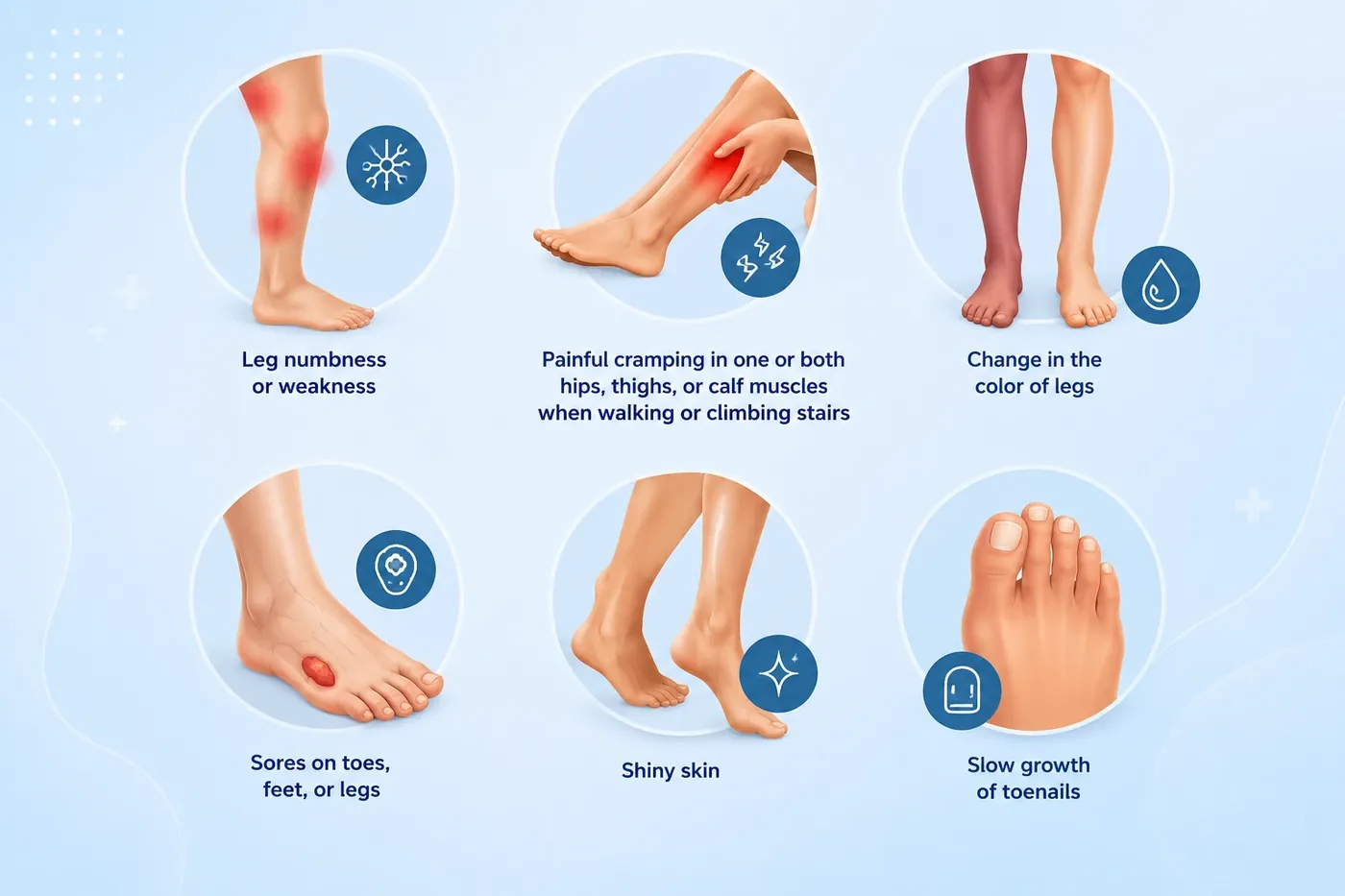
The main signs show up in the legs and feet, and leg pain on walking that eases with rest is the classic one.
Leg Pain When Walking
Cramping or aching in the calves or thighs that comes on with walking and eases with rest.
Cold Feet and Toes
Feet or toes that feel persistently cold or numb can signal poor blood flow.
Slow-Healing Wounds
Cuts, sores or ulcers on the feet and legs that are slow to heal or keep coming back.
Pale or Bluish Skin
Skin on the legs or feet that looks pale or takes on a bluish tinge.
Weak or Absent Pulse
A weak or missing pulse in the feet, which the doctor checks during your examination.
Hair Loss and Shiny Skin
Less hair on the legs and feet, with thin, shiny skin from reduced circulation.

How Diabetic Vascular Disease Is Checked in Lahore
The doctor examines your legs and feet and uses simple circulation tests, and reviews your sugar, blood pressure and cholesterol to judge your overall risk.
What Raises Your Risk?
Six things speed up artery damage: high blood sugar, high blood pressure, high cholesterol, smoking, long-standing diabetes and extra weight.
High Blood Sugar
The main driver of damage to the artery walls.
High Blood Pressure
Raised pressure stiffens and strains arteries throughout the body.
High Cholesterol
Cholesterol speeds up the fatty build-up that narrows your arteries.
Cigarette Smoking
Smoking sharply speeds artery damage and cuts blood flow to the limbs.
Years With Diabetes
Vascular disease becomes more likely the longer diabetes has been present.
Excess Weight
Extra weight adds to the load on your heart and blood vessels.
Diabetic Vascular Disease Care in Lahore: The Clinic's Part and the Surgeon's
Advanced narrowing is treated with a vascular procedure, and Dr. Rizwan arranges the referral promptly once your checks show an artery needs one.
Staying active and eating well protect your circulation alongside the medical control. Wounds on the feet that are slow to heal are covered on the diabetic foot treatment in Lahore page.
Get Your Circulation Checked
Any of the signs above is reason enough to book a circulation check on WhatsApp or by phone, Mon to Sat, by appointment.
Book a consultation with Dr. Rizwan Niazi
Send a WhatsApp message or call the clinic to choose a time.
What Our Patients Say
I have been taking services from Dr. Rizwan Niazi for the past four months, and I am truly very satisfied. I was struggling with obesity, but Dr. Rizwan guided me properly and helped me a lot throughout my weight loss journey. His support, guidance, and professionalism made a big difference for me.
I genuinely recommend that if anyone is struggling with obesity or wants to lose weight in a healthy way, they should definitely consult Dr. Rizwan Niazi. This review is completely heartfelt and based on my personal experience.
Best doctor! I really loved meeting her. It’s been 3 months, and the weight issue that was my biggest concern has been resolved. Along with that, all my other problems have improved as well. I have lost 12 kg, very comfortably and without feeling stressed. She listens to everything very patiently and carefully, and makes you feel completely satisfied and reassured. I’m genuinely very happy with my experience.
Dr. Rizwan’s treatment for diabetes is excellent. Under his care, my weight dropped from 129kg to 92.4kg in just a few months. He is the best doctor in town and very friendly. I highly recommend him!
I visited Dr. Rizwan Niazi for weight loss and honestly had a very good experience. He explained everything clearly and guided me step by step. The results have been great so far. In my opinion, he is one of the best weight loss doctors in Pakistan.
I consulted Dr. Rizwan for thyroid issues after struggling for a long time. He identified the problem quickly and adjusted my treatment properly. I'm feeling much better now. A truly professional doctor and one of the best endocrinologists in Pakistan.
Dr. Rizwan is truly doing remarkable work. Managing diabetes and obesity is never easy, but his expertise and care make a real difference. Highly recommended for anyone looking for trusted guidance.
Good doctor who understood my issues and gave me the best treatment options. Very cooperative doctor.
Alhumdulillah good feedbacka very cooperative doctor and my Diabetes complete finished thanks doctor Rizwan Niazi and diabesity solutions
Frequently Asked Questions
Can blood vessels damaged by diabetes be repaired?
Caught early, the narrowing can be slowed or stopped, which protects the arteries you have. A vessel that is already badly narrowed needs a surgeon's procedure instead.