
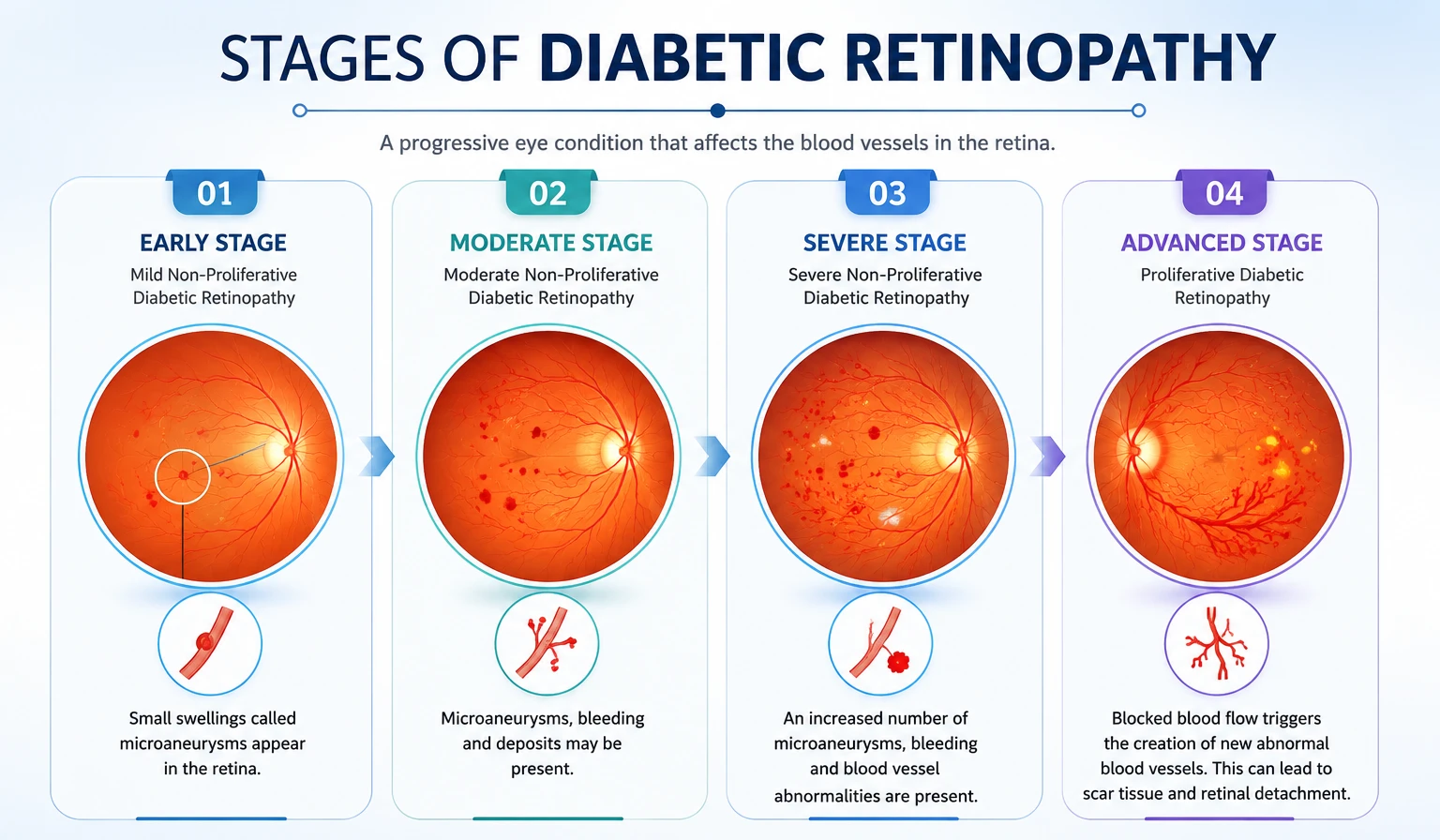
DIABETIC EYE CARE – DHA LAHORE Specialist care for diabetic retinopathy in DHA Lahore, with in-clinic diabetic eye screening to catch damage to the retina early, before it threatens your sight. Exclusive: Dr. Rizwan Niazi offers in-clinic diabetic eye screening – included with your consultation. The only clinic in Lahore providing this in-house. ذیابیطس آنکھ کے پردے (ریٹینا) کی باریک رگوں کو نقصان پہنچا سکتی ہے جس سے بینائی متاثر ہوتی ہے، اور اکثر شروع میں کوئی علامت ظاہر نہیں ہوتی۔ ڈاکٹر رضوان نیازی کلینک میں ہی ذیابیطس کے لیے آنکھ کا اسکریننگ ٹیسٹ کرتے ہیں تاکہ بیماری کو ابتدائی مرحلے میں پکڑا جا سکے۔ بہتر علاج کے لیے ماہرِ غدود سے رجوع کریں۔ Diabetic retinopathy is damage to the tiny blood vessels in the retina, the light-sensitive layer at the back of the eye, caused by long-standing high blood sugar. It is one of the most common causes of sight loss in people with diabetes, yet in the early stages it usually causes no symptoms at all. Because it develops silently, regular screening is the single most important step. Dr. Rizwan Niazi provides diabetic eye screening in the clinic and manages the blood sugar, blood pressure and cholesterol that drive the disease, arranging timely referral for laser or injection treatment when needed. SIGNS & SYMPTOMS Early diabetic retinopathy is usually silent. When symptoms appear, the disease is often already advanced, which is why screening matters. Vision that becomes blurry or goes in and out of focus can be an early warning sign. Small dark shapes, spots or strings drifting across your vision may signal bleeding in the eye. Dark or blank patches in your field of vision can develop as the retina is damaged. Difficulty seeing in low light or at night is a common complaint. Colours may appear washed out or less vivid than before. A sudden drop in vision is an emergency and needs urgent specialist attention. DISEASE STAGES Retinopathy progresses through clear stages. Catching it early, before the advanced stage, gives the best chance of protecting your vision. RISK FACTORS The longer and less controlled your diabetes, the higher the risk. Managing these factors slows the disease. Persistently high blood sugar is the main driver of damage to the retina. Raised blood pressure adds further strain to the delicate retinal vessels. The longer you have had diabetes, the greater the chance of retinopathy. Smoking damages blood vessels and accelerates diabetic eye disease. Diabetes in pregnancy can cause retinopathy to appear or worsen quickly. High cholesterol contributes to deposits and damage in the retina. DIAGNOSIS & TREATMENT Management combines early detection in the clinic with tight control of the factors that drive the disease. In-clinic diabetic eye screening finds retinopathy before symptoms appear, when it is most treatable. Tight control of blood sugar, blood pressure and cholesterol slows or halts progression. Prompt referral for laser or injection treatment when the retina needs more than medical care. Only Clinic in Lahore Diabetic retinopathy often causes no symptoms until sight is already at risk. That is why Dr. Rizwan Niazi offers diabetic eye screening right here in the clinic, included with your consultation, so changes in the retina are caught early. This is a service no other clinic in Lahore currently offers in-house. Diabetic retinopathy is preventable and treatable when caught early. Book a consultation with Dr. Rizwan Niazi in DHA Lahore and have your eyes screened. Most diabetes care stops at blood sugar and tells patients to visit an eye clinic separately. Dr. Rizwan Niazi screens your eyes in the same clinic and treats the root causes, so problems are caught and managed early. Diabetic eye screening is done in the clinic, included with your consultation. Blood sugar, blood pressure and cholesterol are managed together to protect your eyes. Fast, clear referral for laser or injection treatment whenever it is needed. If you have diabetes and have not had your eyes screened recently, it is worth doing, even with no symptoms. Message the clinic and we will arrange it with your consultation. Yes. Dr. Rizwan Niazi offers diabetic eye screening in the clinic, included with your consultation. It is the only clinic in Lahore currently providing this in-house service to its patients. In the early stages there are often no symptoms at all. Later signs include blurred vision, floaters or dark spots, poor night vision and dark patches in your sight, which is why regular screening is so important. It is diagnosed through a diabetic eye screening that examines the retina. Dr. Rizwan also reviews your blood sugar, blood pressure and cholesterol to assess and reduce your overall risk. Yes. Caught early, progression can be slowed or stopped by controlling blood sugar, blood pressure and cholesterol. More advanced disease is treated with laser or injections, for which Dr. Rizwan arranges timely referral. Most people with diabetes should have their eyes screened at least once a year, or more often if changes are found. Dr. Rizwan will advise the right interval for you. Not if it is caught and managed early. The biggest risk comes from undetected disease, which is exactly why in-clinic screening and good diabetes control matter so much.
Diabetic Retinopathy
Treatment in Lahore | Dr. Rizwan Niazi
👁️
ذیابیطس کے سبب آنکھ کی بیماری (ریٹینوپیتھی)
What Is Diabetic Retinopathy?
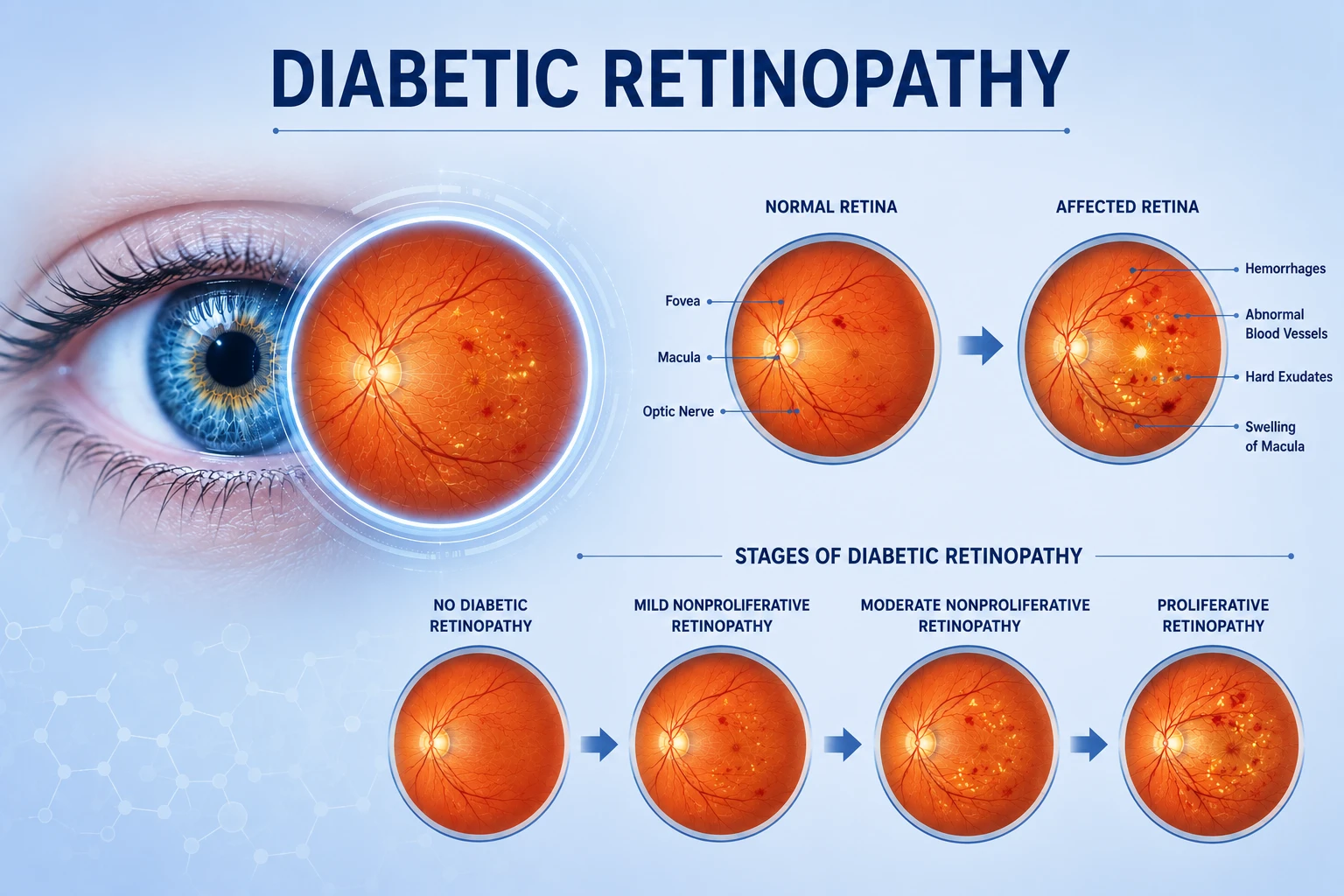
Symptoms of Diabetic Retinopathy
👁️
Blurred Vision
🌫️
Floaters & Dark Spots
🕳️
Dark or Empty Areas
🌙
Poor Night Vision
🎨
Faded Colours
⚠️
Sudden Vision Loss
The Stages of Diabetic Retinopathy
What Raises Your Risk?
🩸
High Blood Sugar
🩺
High Blood Pressure
⏳
Long Duration of Diabetes
🚬
Smoking
🤰
Pregnancy
🧈
High Cholesterol
How Diabetic Retinopathy Is Managed
🔎
Early Detection
🩸
Blood Sugar & BP Control
🤝
Timely Specialist Referral
In-Clinic Diabetic Eye Screening
Protect Your Sight Before Symptoms Start

Why See Dr. Rizwan Niazi for Diabetic Retinopathy?
👁️
In-House Eye Screening
🩸
Root-Cause Control
🤝
Timely Referral
Living With Diabetes? Get Your Eyes Screened
Frequently Asked Questions
Does Dr. Rizwan do the eye screening in the clinic?
What are the early signs of diabetic retinopathy?
How is diabetic retinopathy diagnosed?
Can diabetic retinopathy be treated?
How often should I have my eyes screened?
Will I lose my sight if I have diabetic retinopathy?
Related Diabetes Care Services