
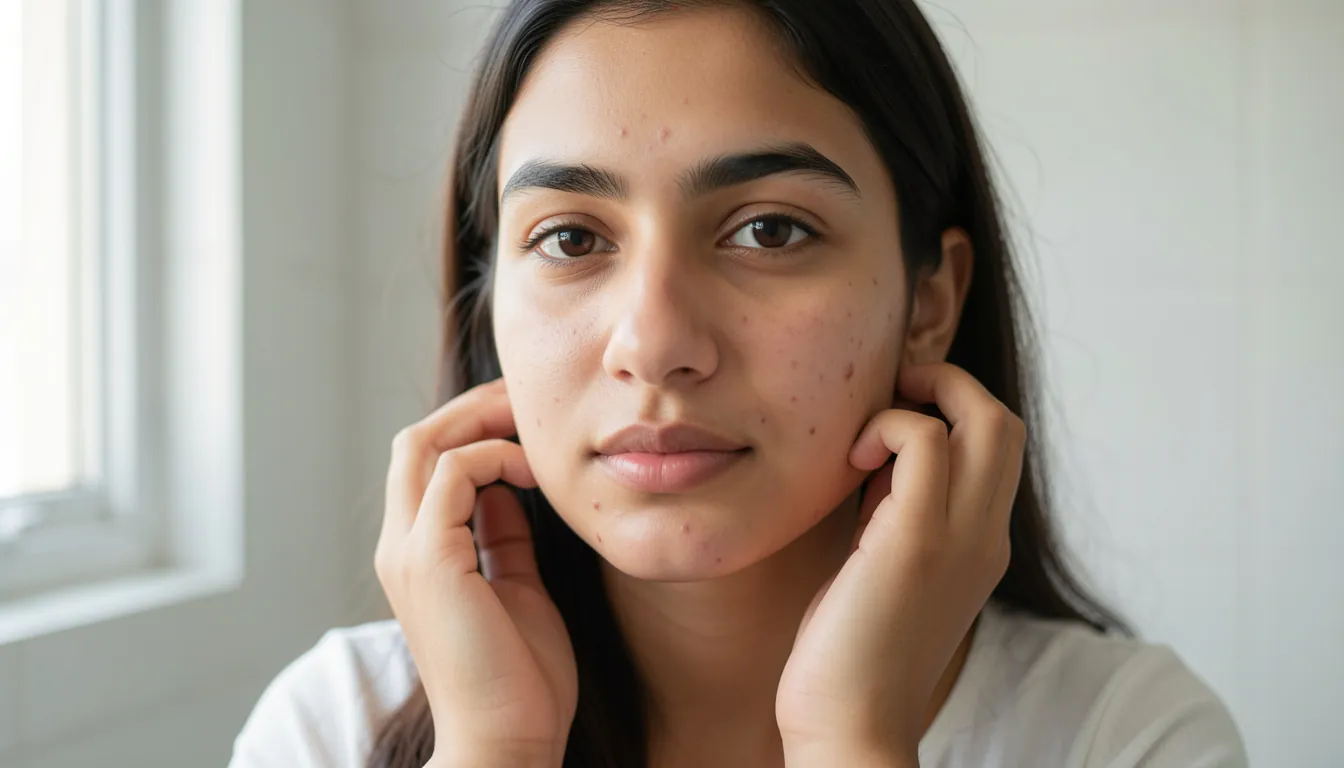
“My face keeps breaking out even after so many creams.” I hear that line a lot. The short answer is this: PCOS acne is commonly driven by hormone changes, especially excess androgens and sometimes by insulin resistance, so treatment usually pairs standard acne care with hormonal options when needed. Combined oral contraceptives are the usual hormonal first choice, spironolactone is a common add-on, metformin can help when insulin resistance is involved, and isotretinoin is reserved for severe or scarring disease.
In This Article
- How do you treat PCOS acne?
- What is the best treatment for hormonal acne in PCOS?
- Does metformin help PCOS acne?
- Can birth control pills help acne from PCOS?
- Does spironolactone work for PCOS acne?
- When acne and other symptoms need a clinic visit this week
- What to write down before your appointment
- Gather your cycle notes and photos before you meet
- Questions patients ask me after this conversation
How do you treat PCOS acne?
Start with the obvious frustration. “My face keeps breaking out even after so many creams” is exactly what brings many people into my clinic. I tell them the same thing I would tell you. Active pimples need active skin care, while hormonal treatment handles the signal telling the skin to make more oil.
Standard topical care still matters. Topical retinoids, benzoyl peroxide, and targeted antibiotics reduce inflamed lesions while we work on the hormones in the background. Treating the skin now prevents scarring while hormonal approaches take effect.
Women with PCOS get acne a lot more often than women without PCOS. That higher rate is why I treat acne in PCOS as a symptom of hormone imbalance, not as a cosmetic afterthought.
If creams have not been enough, see hormonal acne treatment in Lahore.
What is the best treatment for hormonal acne in PCOS?
There is no single best treatment that fits every person. The sensible path is stepwise. Start skin-directed therapy for the lesions, then add or consider a hormonal option if the acne looks driven by androgens or if other PCOS features are present.
In clinic I explain the engine analogy. Think of insulin resistance and androgen excess as the engine driving oil production under the skin. Topicals are the cleanup crew. Hormonal medicines turn down the engine. When both work together the results are better than either alone.
I will be honest, we do not have a neat one-pill answer for everyone. Guidance reviews found the evidence is not tidy enough to call one approach universally superior, so expect a stepwise plan that is personalised to your situation.
Does metformin help PCOS acne?
A short answer is yes, sometimes. Metformin is not primarily an acne drug, but when insulin resistance is part of your PCOS it can improve the hormonal drive behind acne and help periods and metabolic features.
There is a sizeable signal that metformin adds benefit in the right patients. A pooled analysis reported acne-score improvement across studies that included 51 studies and 2,405 people with PCOS. That suggests metformin can move the needle when metabolic issues are present.
I cannot promise you a timeline. What I can promise is that we will check and adjust. If metformin is on the table we discuss stomach side effects, pregnancy plans, and how it fits with the rest of your acne care.
Can birth control pills help acne from PCOS?
Yes, combined oral contraceptives are the usual first-line hormonal option for adult women whose acne is tied to PCOS and who are not pregnant or planning pregnancy right away. These pills lower the androgen signal that tells your skin to make more oil.
Expect patience. Real improvement often needs time. The clinical summary I use with patients is this: hormonal pills usually need between 3 to 6 months before you see the main change, and older data describe roughly a 30% to 60% reduction in inflammatory lesions and around 50% to 90% overall improvement after that period.
Not every pill is the same and not every person can take estrogen safely. If you smoke and are over 35, or you have a history of clots or migraine with aura, an estrogen-containing pill may not be safe. Those choices are made together after a careful risk review.
Does spironolactone work for PCOS acne?
Spironolactone is commonly used when acne persists despite topical care or after starting a hormonal contraceptive. It blocks androgen receptors at the skin and can reduce oil production in many people.
It is a frequent next step in my practice for persistent hormonal acne. The safety conversation matters. Do not take spironolactone if you are pregnant or planning pregnancy. We also review blood pressure and potassium where relevant, and I monitor blood tests when appropriate.
The biggest mistake I see is starting six changes at once. If you add spironolactone, try to keep other variables steady so we can see what helps and what does not. That way we make progress without guessing.
When acne and other symptoms need a clinic visit this week
If acne appears together with menstrual changes or rapid new hair growth, I want to see you sooner rather than later. These signs can mean the hormone imbalance is active and needs assessment.
Book an appointment soon if any of the following apply. Go to emergency care now if a worrying infection, severe reaction, or sudden systemic symptoms develop.
- Book soon if: you have new or worsening irregular periods, marked increase in facial or body hair, acne that is forming early scarring, or pregnancy is possible and you are considering hormonal medicines.
- Go to emergency now if: a lesion becomes extremely painful with spreading redness and fever, or you have a suspected severe reaction to a medicine. Severe nodulocystic acne that is rapidly worsening and causing pain may also need urgent specialist input.
What to write down before your appointment
Bring a short, practical note so we can use time well. A clear list is more useful than a long story. Here is what I ask most patients to bring on their phone or on paper.
- Photos of your acne taken over several weeks, showing the worst and any scarring pattern.
- Dates of your menstrual cycles for the last three months and whether you have irregular or missed periods.
- A list of current face products, supplements, and any medicines you take, plus whether pregnancy is possible or planned.
- Any recent lab results, especially if you have been tested for blood sugar, or if you were told you have insulin resistance.
- Short notes about what has helped or made the acne worse, and how much it is affecting your mood or day to day life.
Gather your cycle notes and photos before you meet
Bring the items that let us see the pattern. When families come in together, this is usually their first question and it saves time to have photos and cycle notes ready. That simple preparation often speeds diagnosis and means we can make a treatment plan in the first visit.
Some of this is trial and error, and I would rather say that than dress it up. If you bring clear notes we spend appointment time deciding the right next step for you rather than chasing basic facts.
At my clinic in DHA Lahore, I see this several times a week and I will personally review your history and pictures to set a plan that fits your pregnancy plans and metabolic picture.
Questions patients ask me after this conversation
How long does PCOS acne take to improve?
Hormonal treatments need patience. Expect 3 to 6 months before the main change is clear. Topical treatments often improve active spots sooner, so we usually combine both approaches and check progress at regular intervals.
Should I use isotretinoin for PCOS acne?
Isotretinoin is reserved for severe, scarring, or treatment-resistant acne. It can be very effective, but it requires specialist oversight and strict pregnancy prevention because of the high risk to a pregnancy. We only consider it after other reasonable options have failed or if scarring is already occurring.
Are supplements enough for PCOS acne?
Supplements such as inositols or herbal products are commonly asked about, but the evidence is weak and inconsistent. I do not recommend replacing established acne treatments with supplements. If you want to try one, tell me so we can check for interactions and make sure it is safe with any pregnancy plans.

Dr. Rizwan Niazi
Dr. Rizwan Niazi is a consultant endocrinologist and diabetologist in DHA Lahore with more than 21 years of experience. He holds MBBS, MRCP, MCPS and MD Endocrinology, and his clinic work covers medical weight loss, diabetes, thyroid and hormone disorders, and PCOS. He writes these articles to answer the questions patients actually ask him in clinic.