Diabetic Vascular Disease Treatment in Lahore
- Diabetes related circulation care
- Leg pain and poor blood flow assessment
- Foot risk and wound prevention
- Consultation available in DHA Lahore
Diabetic vascular disease can reduce blood flow to the legs, feet, heart, and other organs. Dr. Rizwan Niazi helps patients manage diabetes related circulation risks through sugar control, risk assessment, and timely medical guidance.
What is Diabetic Vascular Disease?
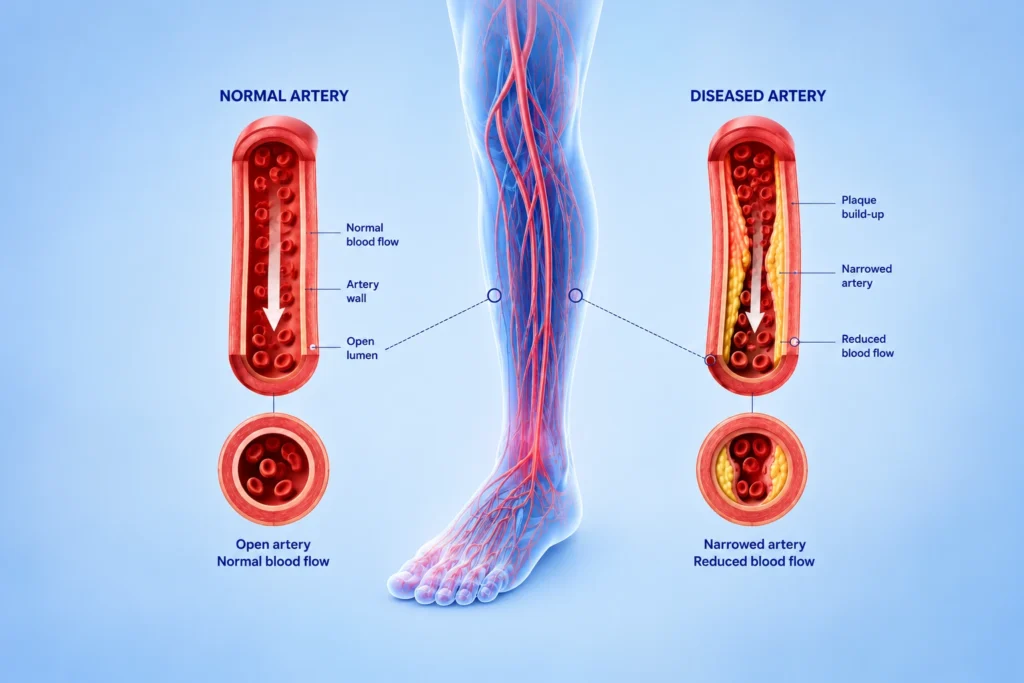
Diabetic vascular disease happens when diabetes damages blood vessels over time. High blood sugar, high blood pressure, cholesterol problems, and smoking can increase the risk of narrowed or blocked arteries.
When circulation becomes poor, patients may develop leg pain, cold feet, slow wound healing, foot ulcers, or higher risk of heart and stroke related problems.
Symptoms of Diabetic Vascular Disease
Symptoms may develop slowly and are often ignored in the early stage.
- Leg pain while walking
- Pain that improves after rest
- Cold feet or one foot colder than the other
- Numbness or weakness in legs
- Slow healing wounds
- Skin color changes in feet or legs
- Weak pulse in the feet
Patients with diabetes should not ignore foot wounds, leg pain, or circulation changes.
What Causes Vascular Disease in Diabetes?
Long term high blood sugar can damage blood vessels and nerves that support circulation. Over time, fatty deposits may build up in arteries and reduce blood flow.
Risk may increase with:
- Poor diabetes control
- High blood pressure
- High cholesterol
- Smoking
- Obesity
- Kidney disease
- Long duration of diabetes

How Serious is Diabetic Vascular Disease?
Diabetic vascular disease can become serious if blood flow continues to reduce. Poor circulation may delay wound healing and increase the risk of diabetic foot ulcers, infections, and in severe cases, limb complications.
It may also be linked with higher risk of heart disease and stroke, which is why early assessment and risk control are important.
How Diabetic Vascular Disease is Checked
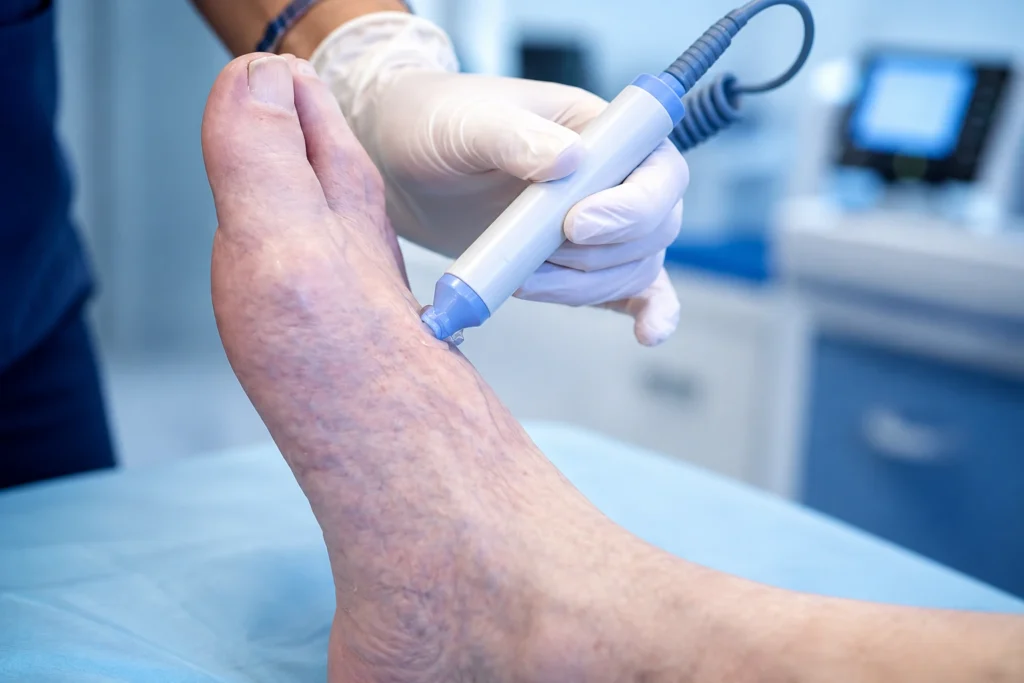
Evaluation depends on symptoms and medical history. A doctor may review blood sugar control, blood pressure, cholesterol, foot pulses, skin changes, and wound healing.
Further tests may be advised when circulation problems are suspected.
- Foot and pulse examination
- Blood pressure and cholesterol review
- HbA1c testing
- Kidney function testing
- Doppler or vascular assessment if needed
Treatment Approach
Treatment focuses on improving diabetes control, protecting circulation, reducing risk factors, and preventing foot complications.
A care plan may include:
- Blood sugar and HbA1c management
- Blood pressure control
- Cholesterol management
- Smoking cessation guidance
- Foot care and wound prevention
- Vascular specialist referral if advanced disease is suspected
How to Improve Vascular Health with Diabetes
Good circulation care starts with better metabolic control. Patients are usually advised to keep blood sugar stable, manage blood pressure, reduce cholesterol risk, stay physically active as advised, and avoid smoking.
Daily foot checks are also important because reduced blood flow and reduced sensation can make small injuries harder to notice.
Food and Lifestyle Guidance
Food choices can support better sugar, cholesterol, and blood pressure control. Patients may need to reduce sugary drinks, fried foods, excess salt, processed snacks, and refined carbohydrates.
A practical meal plan should be based on diabetes control, weight, kidney health, cholesterol, and overall medical condition.
When Should You Visit a Doctor?
You should visit a doctor if you have diabetes with leg pain while walking, cold feet, slow healing wounds, foot color changes, numbness, or uncontrolled sugar levels.
A consultation with Dr. Rizwan Niazi in DHA Lahore can help assess diabetes control, circulation risk, and foot safety before complications become more serious.
Concerned about diabetes and circulation problems? Book a consultation for proper sugar, foot, and vascular risk assessment.
Why Choose Dr. Rizwan Niazi for Diabetic Vascular Disease Care?
Diabetic vascular disease needs more than symptom control. It needs diabetes management, circulation risk review, blood pressure control, cholesterol monitoring, and foot protection.
- Experienced endocrinologist and diabetologist
- Diabetes complication risk assessment
- Focus on sugar control and foot protection
- Clinic located in DHA Lahore
Visit the Clinic or Book a Consultation
If diabetes is affecting your circulation, legs, feet, or wound healing, timely evaluation can help reduce future risk.
You can visit the clinic in DHA Lahore for diabetic vascular disease assessment and diabetes care planning.
Call or WhatsApp: +92 300 6088807
Frequently Ask Questions
What is vascular disease in diabetes?
Vascular disease in diabetes means blood vessels become damaged or narrowed over time. This can reduce circulation to the legs, feet, heart, brain, and other organs.
What are the symptoms of diabetic vascular disease?
Common symptoms include leg pain while walking, cold feet, slow wound healing, numbness, skin color changes, and weak foot pulses.
How serious is vascular disease?
It can become serious if ignored. Poor circulation can increase the risk of foot ulcers, infections, heart disease, stroke, and limb complications.
Can vascular disease go away?
Vascular disease usually needs long term management. Better diabetes control, blood pressure control, cholesterol management, and lifestyle changes can help slow progression and reduce risks.
What is the best treatment for diabetic vascular disease?
Treatment depends on severity. It may include diabetes control, blood pressure and cholesterol management, foot care, lifestyle changes, and referral to a vascular specialist when needed.
How can I improve vascular health with diabetes?
Stable blood sugar, regular activity as advised, healthy eating, cholesterol control, blood pressure control, and stopping smoking can support better vascular health.
When should I visit a doctor for diabetic vascular disease?
You should visit a doctor if you have diabetes with leg pain, cold feet, wounds that heal slowly, numbness, or color changes in the feet. Dr. Rizwan Niazi in DHA Lahore can help assess your sugar control, circulation risk, and foot safety with a proper diabetes-focused plan.
Which doctor should I consult for diabetic vascular disease?
A diabetologist or endocrinologist can help manage the diabetes and metabolic risk factors behind vascular disease. Dr. Rizwan Niazi provides diabetes complication assessment and can guide patients toward specialist vascular care if advanced circulation problems are suspected.