Diabetic Neuropathy Treatment in Lahore
- Care for burning and numb feet
- Diabetes nerve pain management
- Foot screening and complication prevention
- Consultation available in DHA Lahore
Diabetic neuropathy can cause burning, tingling, numbness, and pain in the feet or hands. Dr. Rizwan Niazi provides diabetes-focused nerve care with proper sugar control, symptom management, and foot protection guidance.
What is Diabetic Neuropathy?
Diabetic neuropathy is nerve damage caused by long term diabetes and uncontrolled blood sugar levels. It commonly affects the feet and legs first, but it may also involve the hands, digestion, bladder, heart rate, and blood pressure control.
The condition can develop slowly, which is why many patients ignore early symptoms until discomfort, numbness, or foot problems become more noticeable.
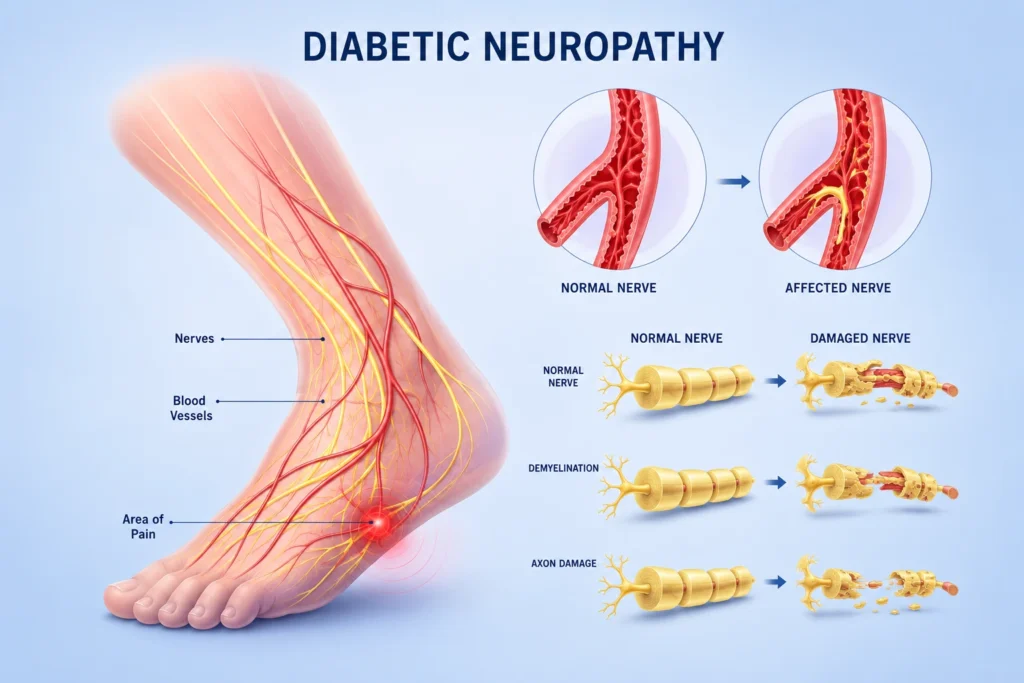
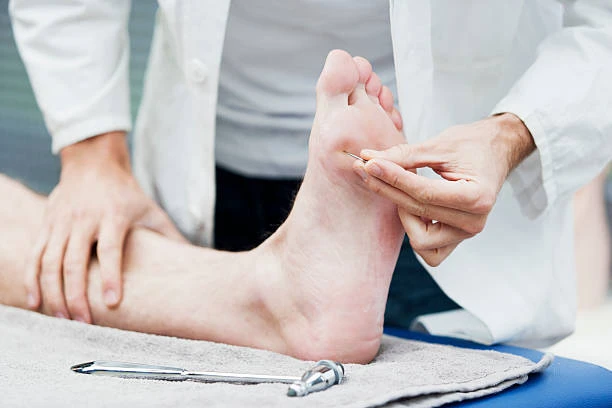
Common Symptoms of Diabetic Neuropathy
Symptoms may vary depending on which nerves are affected. Many patients first notice changes in their feet.
- Burning sensation in feet
- Numbness or reduced feeling
- Tingling or pins and needles
- Sharp or electric pain
- Pain that becomes worse at night
- Loss of balance or foot weakness
- Slow healing wounds or unnoticed foot injuries
If these symptoms are present, proper evaluation is important to reduce the risk of diabetic foot complications.
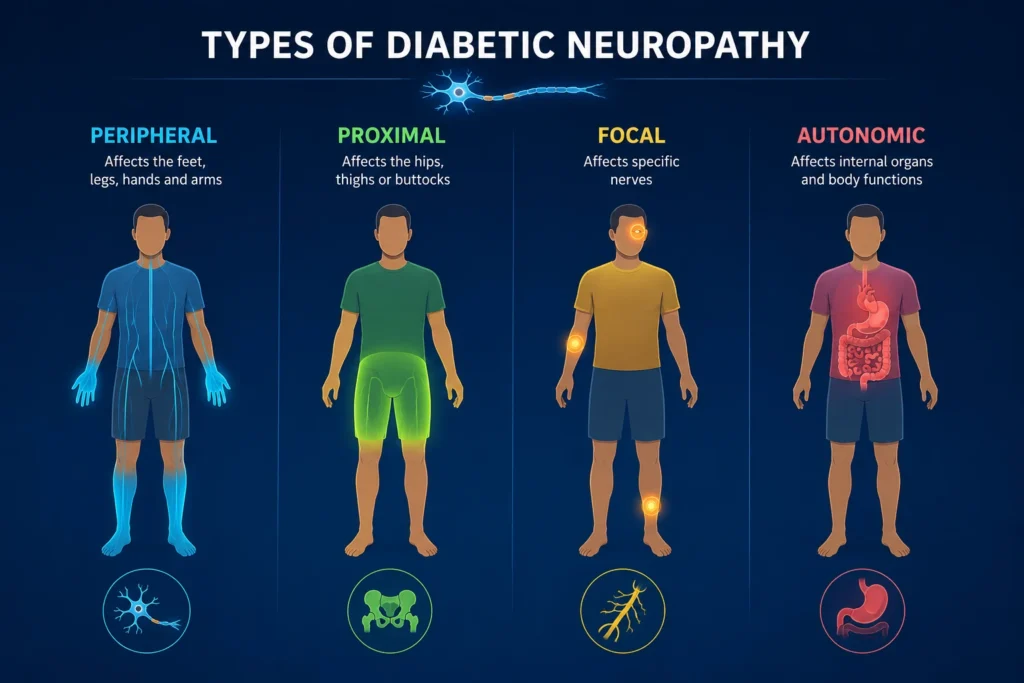
Types of Diabetic Neuropathy
Diabetic neuropathy can affect different nerve groups in the body.
- Peripheral neuropathy affects the feet, legs, hands, and arms.
- Autonomic neuropathy may affect digestion, bladder control, sweating, blood pressure, or heart rate.
- Proximal neuropathy may cause pain or weakness in the hips, thighs, or legs.
- Focal neuropathy affects a specific nerve and may cause sudden weakness or pain in one area.
What Causes Diabetic Neuropathy?
The main cause is long term high blood sugar, which can damage nerves and small blood vessels that supply the nerves.
Risk may increase with:
- Long duration of diabetes
- Poor blood sugar control
- High blood pressure
- High cholesterol
- Smoking
- Kidney disease
- Vitamin B12 deficiency in some patients
Diabetic Neuropathy Treatment Approach
Treatment focuses on controlling diabetes, reducing nerve pain, protecting the feet, and preventing further nerve damage.
A treatment plan may include:
- Blood sugar and HbA1c review
- Medication adjustment for diabetes control
- Nerve pain management
- Foot examination and wound risk assessment
- Diet and lifestyle guidance
- Screening for vitamin deficiencies when needed
There is no quick fix for diabetic nerve damage, but early treatment can help reduce symptoms and lower the risk of complications.
Foot Care is Very Important
Diabetic neuropathy can reduce feeling in the feet. This means small cuts, blisters, burns, or pressure wounds may go unnoticed and become serious.
Patients are usually advised to:
- Check feet daily
- Keep feet clean and dry
- Avoid walking barefoot
- Wear comfortable footwear
- Report wounds, swelling, redness, or discharge early
Regular foot checks are especially important for patients with numbness, burning, poor circulation, or previous foot wounds.
Foods and Lifestyle Support for Neuropathy
Food choices do not cure neuropathy directly, but better sugar control can help slow progression and support nerve health.
Patients may need to reduce sugary drinks, refined carbohydrates, deep fried foods, and highly processed snacks. A balanced diet with controlled portions, protein, vegetables, and regular meal timing may help improve sugar stability.
When Should You Visit a Doctor?
You should see a diabetes specialist if you have burning feet, numbness, tingling, foot wounds, balance issues, or uncontrolled sugar levels.
Early evaluation with Dr. Rizwan Niazi in DHA Lahore can help identify the cause, reduce discomfort, and protect against long term diabetes related foot problems.
Why Choose Dr. Rizwan Niazi for Diabetic Neuropathy?
Diabetic neuropathy needs more than pain relief. It needs proper diabetes control, foot protection, nerve assessment, and long term monitoring.
- Experienced endocrinologist and diabetologist
- Care for diabetes and nerve related complications
- Focus on sugar control and complication prevention
- Clinic located in DHA Lahore
Visit the Clinic or Book a Consultation
If you have burning feet, numbness, tingling, or diabetic foot concerns, proper assessment should not be delayed.
You can visit the clinic in DHA Lahore for diabetic neuropathy evaluation and diabetes care planning.
Frequently Ask Questions
What doctor is best for diabetic neuropathy?
An endocrinologist or diabetologist is the right doctor to evaluate diabetic neuropathy because the condition is closely linked with blood sugar control and long term diabetes management. Dr. Rizwan Niazi in DHA Lahore provides diabetes-focused nerve care with proper assessment, sugar control planning, and foot protection guidance.
What is the best treatment for diabetic neuropathy?
The best treatment depends on the severity of symptoms and blood sugar control. Treatment may include better diabetes management, nerve pain medicines, foot care, lifestyle changes, and screening for related problems.
Can a person recover from diabetic neuropathy?
Nerve damage may not always fully reverse, but symptoms can improve and progression may slow with better sugar control, proper treatment, and regular follow up.
What are the 5 main symptoms of diabetic neuropathy?
Common symptoms include burning feet, numbness, tingling, sharp pain, and reduced sensation in the feet or hands.
Does cutting out sugar help neuropathy?
Reducing excess sugar intake may help improve blood sugar control, which is important for slowing diabetes related nerve damage. A full diabetes care plan is usually more effective than diet changes alone.
What vitamins help diabetic neuropathy?
Some patients may need vitamin support, especially if they have a deficiency such as vitamin B12 deficiency. Supplements should be taken after medical evaluation.
Can Neurobion treat diabetic neuropathy?
Neurobion may help if symptoms are related to vitamin deficiency, but diabetic neuropathy usually needs proper diabetes control and medical treatment. It should not replace consultation with a diabetes specialist.
When should I visit a doctor for diabetic neuropathy?
You should visit a doctor if you feel burning, numbness, tingling, foot pain, balance problems, or wounds that are slow to heal. A consultation with Dr. Rizwan Niazi can help detect nerve issues early and reduce the risk of serious diabetic foot complications.