Diabetic Retinopathy Treatment in Lahore
- Diabetes related eye risk assessment
- Support for blurred vision and eye symptoms
- Blood sugar and HbA1c control planning
- Consultation available in DHA Lahore
Diabetic retinopathy is an eye complication of diabetes that can affect vision over time. Dr. Rizwan Niazi helps patients manage diabetes control, reduce risk factors, and get timely eye evaluation when needed.
What is Diabetic Retinopathy?
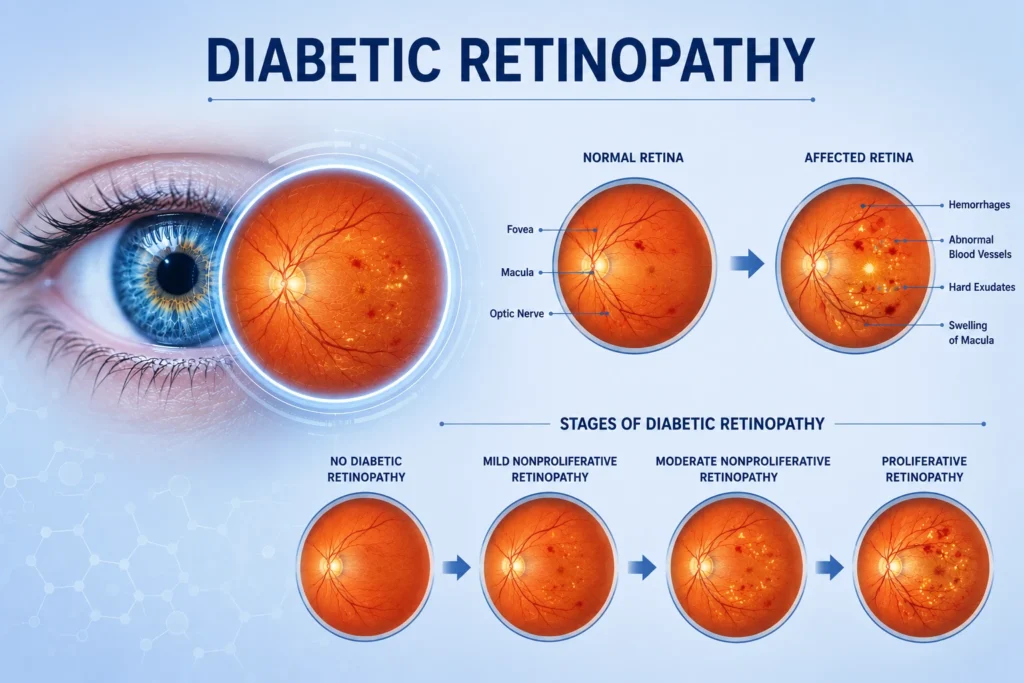
Diabetic retinopathy happens when long term high blood sugar damages the small blood vessels in the retina, the light sensitive layer at the back of the eye.
In the early stage, many patients may not notice any symptoms. This is why regular eye screening is important for people living with diabetes.

Warning Signs of Diabetic Retinopathy
Diabetic retinopathy may stay silent at first, but symptoms can appear as the condition progresses.
- Blurred or fluctuating vision
- Dark spots or floaters
- Difficulty seeing at night
- Reduced sharpness of vision
- Sudden vision changes
- Vision loss in advanced cases
Any sudden change in vision should be checked quickly.
Who is at Risk?
The risk of diabetic retinopathy increases when diabetes remains uncontrolled for a long time.
Risk may be higher in patients with:
- Long duration of diabetes
- High HbA1c levels
- High blood pressure
- High cholesterol
- Kidney disease
- Pregnancy with diabetes
- Smoking
Stages of Diabetic Retinopathy
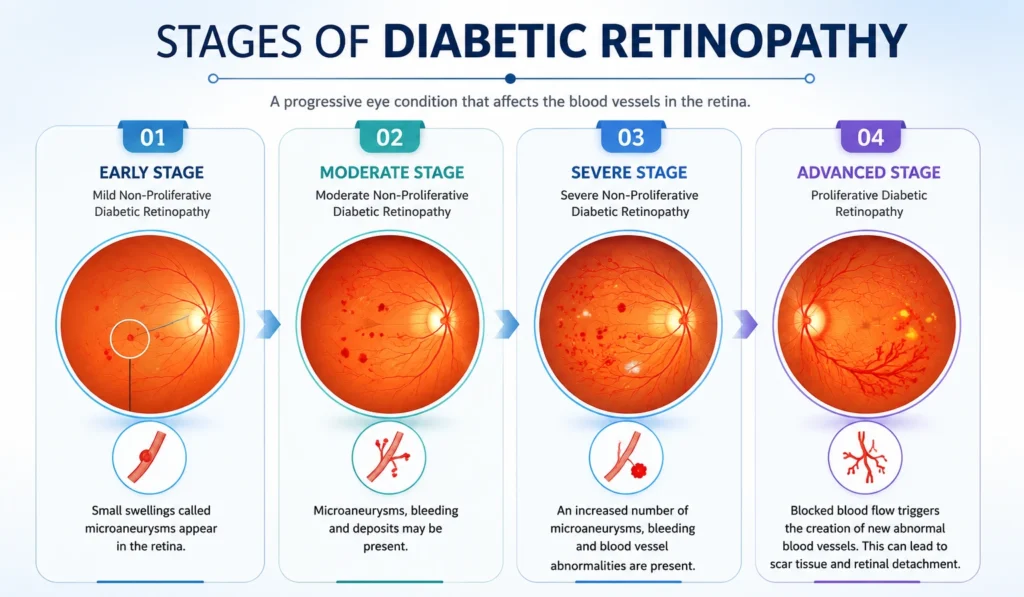
Diabetic retinopathy can progress in stages. Early detection helps reduce the risk of severe vision problems.
- Mild non proliferative retinopathy where small blood vessel changes begin
- Moderate non proliferative retinopathy where blood vessel damage becomes more noticeable
- Severe non proliferative retinopathy where more blood vessels are blocked
- Proliferative diabetic retinopathy where abnormal new blood vessels may grow and increase vision risk
Can Diabetic Retinopathy Be Treated?
Diabetic retinopathy can be managed, especially when detected early. The goal is to slow progression, protect vision, and improve diabetes control.
Treatment may involve:
- Better blood sugar control
- Blood pressure and cholesterol management
- Regular eye screening
- Referral to an eye specialist when needed
- Laser treatment or eye injections in advanced cases
Dr. Rizwan Niazi helps manage the diabetes side of care and guides patients toward timely specialist evaluation when eye treatment is required.
Can You Stop It from Progressing?
Progression can often be slowed with better diabetes control, regular eye exams, blood pressure control, and early treatment of eye changes.
Patients should not wait for vision loss before getting checked. Eye damage can begin before symptoms become obvious.
Can Glasses Correct Diabetic Retinopathy?
Glasses may help with general vision correction, but they do not treat diabetic retinopathy itself.
If vision changes are caused by retinal blood vessel damage, proper eye evaluation and diabetes management are needed.
Food and Lifestyle Support for Eye Protection
Diet does not directly cure diabetic retinopathy, but better sugar control may help reduce progression risk.
Patients are usually advised to control sugary foods and drinks, manage portions, reduce processed foods, stay active, and follow regular diabetes monitoring.
When Should You Visit a Doctor?
You should seek medical advice if you have diabetes with blurred vision, floaters, sudden vision changes, uncontrolled HbA1c, high blood pressure, or long standing diabetes.
A consultation with Dr. Rizwan Niazi in DHA Lahore can help review your diabetes control, identify risk factors, and guide you toward the right eye screening or specialist care.
Worried about diabetes and vision changes? Book a consultation for proper diabetes review and eye risk guidance.
Why Choose Dr. Rizwan Niazi for Diabetes Eye Risk Care?
Diabetic retinopathy needs both eye care and strong diabetes control. Dr. Rizwan Niazi focuses on HbA1c management, blood pressure review, metabolic health, and complication prevention.
- Experienced endocrinologist and diabetologist
- Diabetes complication monitoring
- Focus on sugar control and long term prevention
- Clinic located in DHA Lahore
Visit the Clinic or Book a Consultation
If you have diabetes and are noticing vision changes, do not delay proper assessment.
You can visit the clinic in DHA Lahore for diabetes review and diabetic retinopathy risk guidance.
Call or WhatsApp: +92 300 6088807
Frequently Ask Questions
How do you treat diabetic retinopathy?
Treatment depends on the stage. It may include better sugar control, blood pressure control, regular eye exams, and referral for laser treatment or eye injections if the retina is affected.
Is diabetic retinopathy curable?
Diabetic retinopathy may not always be fully reversible, but early diagnosis and proper treatment can slow progression and help protect vision.
What are the warning signs of diabetic retinopathy?
Warning signs may include blurry vision, floaters, dark spots, difficulty seeing at night, or sudden vision changes.
Can you stop diabetic retinopathy from progressing?
Progression can often be slowed with better HbA1c control, blood pressure management, eye screening, and timely treatment.
Can glasses correct diabetic retinopathy?
Glasses may improve general vision issues, but they do not treat retinal damage caused by diabetes.
How many years of diabetes before retinopathy?
The risk increases with longer diabetes duration, but timing varies from patient to patient. Regular eye screening is important even when vision feels normal.
Who is at risk for diabetic retinopathy?
Patients with long standing diabetes, uncontrolled sugar, high blood pressure, high cholesterol, kidney disease, or pregnancy with diabetes may have higher risk.
When should I visit a doctor for diabetic retinopathy?
You should visit a doctor if you have diabetes with blurred vision, floaters, sudden vision changes, or uncontrolled HbA1c. Dr. Rizwan Niazi in DHA Lahore can help review your diabetes control and guide you toward timely eye screening or specialist care.