Diabetic Nephropathy Treatment in Lahore
- Diabetes related kidney care
- Urine albumin and kidney function review
- Blood sugar and blood pressure control
- Consultation available in DHA Lahore
Diabetic nephropathy is kidney damage caused by long term diabetes. Dr. Rizwan Niazi provides diabetes-focused kidney risk assessment, sugar control planning, and early complication monitoring in Lahore.
What is Diabetic Nephropathy?
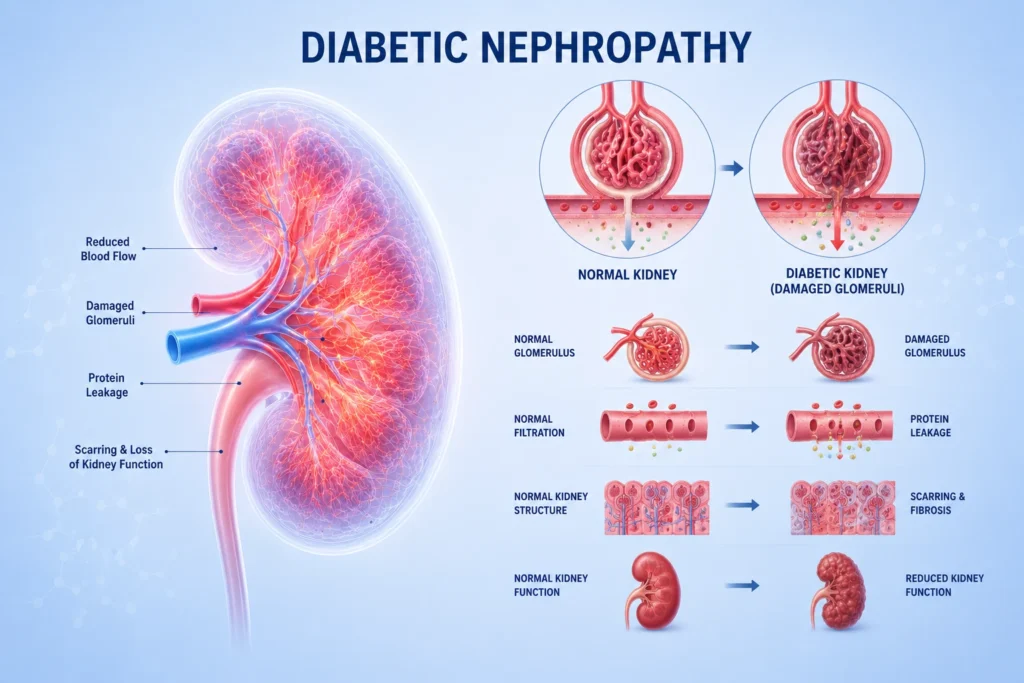
Diabetic nephropathy, also called diabetic kidney disease, happens when high blood sugar damages the small blood vessels in the kidneys. These blood vessels help filter waste and extra fluid from the blood.
In the early stage, many patients do not feel any symptoms. This is why regular kidney screening is important for people living with diabetes.
Early Signs That Should Not Be Ignored
Diabetic nephropathy may remain silent for years. As kidney function becomes affected, some patients may notice changes such as:
- Swelling of feet, ankles, hands, or around the eyes
- Foamy urine
- High blood pressure becoming harder to control
- Tiredness or weakness
- Loss of appetite
- Nausea or feeling unwell
These symptoms should not be ignored, especially in patients with long standing diabetes.
What Causes Diabetic Nephropathy?
The main cause is long term high blood sugar. Over time, uncontrolled diabetes can damage the kidney filters and increase protein leakage in the urine.
Risk may be higher in patients with:
- Poor blood sugar control
- High blood pressure
- Long duration of diabetes
- High cholesterol
- Smoking
- Family history of kidney disease

How Diabetic Kidney Disease is Checked
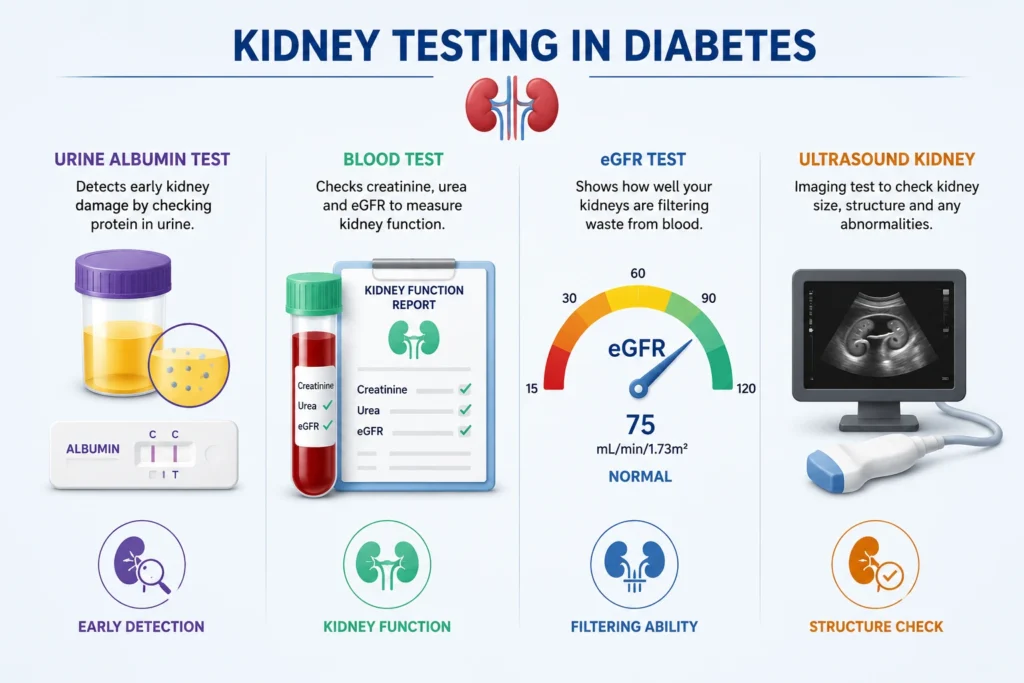
Kidney damage from diabetes is usually checked through blood and urine tests.
- Urine albumin test checks for protein leakage in urine
- eGFR blood test checks kidney filtering function
- Blood pressure review helps assess kidney risk
- HbA1c testing shows long term sugar control
These tests help detect kidney damage early, even before symptoms appear.
Can Diabetic Nephropathy Be Treated?
Diabetic nephropathy can be managed, especially when detected early. Treatment focuses on slowing kidney damage, improving sugar control, managing blood pressure, and reducing further complications.
A treatment plan may include:
- Better blood sugar control
- Blood pressure management
- Medication review and adjustment
- Kidney function monitoring
- Diet and lifestyle guidance
- Referral to a nephrologist if advanced kidney care is needed
How to Control Fasting Blood Sugar During Pregnancy
Fasting sugar can be difficult to control during pregnancy. It may be affected by meal timing, bedtime snacks, hormones, sleep, and insulin resistance.
Patients may need a personalized plan that includes dinner adjustment, healthy bedtime snack guidance, regular monitoring, and medication or insulin if needed.
Foods to Avoid with Gestational Diabetes
Food choices can make a major difference in blood sugar control during pregnancy. The goal is not extreme dieting, but stable sugar levels with proper nutrition.
Patients are usually advised to reduce:
- Sugary drinks and juices
- Sweets and desserts
- White bread and refined flour foods
- Large rice or pasta portions
- Fried and highly processed foods
- Late night high sugar snacks
A pregnancy diet plan should always be balanced and safe for both mother and baby.
Food and Lifestyle Guidance for Kidney Protection
Diet plays an important role in diabetes and kidney protection. Patients may be advised to control sugar intake, reduce excess salt, manage protein intake carefully, avoid smoking, and stay active according to their health condition.
Diet plans should be personalized because kidney needs can differ from one patient to another.
When Should You Visit a Doctor?
You should visit a diabetes specialist if your sugar remains uncontrolled, blood pressure is high, urine shows protein, or you notice swelling, foamy urine, weakness, or reduced appetite.
Early consultation with Dr. Rizwan Niazi in DHA Lahore can help review your diabetes control, kidney risk, and treatment plan before complications progress.
Concerned about diabetes and kidney health? Book a consultation for proper sugar and kidney risk assessment.
Why Choose Dr. Rizwan Niazi for Diabetic Nephropathy Care?
Diabetic kidney disease needs careful diabetes control and long term monitoring. Dr. Rizwan Niazi focuses on identifying kidney risk early, improving sugar control, and guiding patients toward the right care at the right time.
- Experienced endocrinologist and diabetologist
- Diabetes complication monitoring
- Focus on HbA1c, kidney risk, and blood pressure control
- Clinic located in DHA Lahore
Visit the Clinic or Book a Consultation
If you have diabetes and are worried about kidney health, proper evaluation should not be delayed.
You can visit the clinic in DHA Lahore for diabetic nephropathy assessment and diabetes care planning.
Call or WhatsApp: +92 300 6088807
Frequently Ask Questions
What is the cause of diabetic nephropathy?
Diabetic nephropathy is mainly caused by long term high blood sugar damaging the small blood vessels in the kidneys. High blood pressure can make the condition worse.
Can diabetic nephropathy be treated?
Yes, diabetic nephropathy can be managed, especially when detected early. Treatment focuses on better sugar control, blood pressure management, kidney monitoring, and lifestyle changes.
What are the early signs of diabetic kidney disease?
Early diabetic kidney disease may not cause symptoms. Protein in urine, called albumin, can be one of the earliest warning signs and is checked through a urine test.
What are the final stages of diabetic nephropathy?
In advanced stages, kidney function may decline severely and some patients may need specialist kidney care, dialysis, or transplant evaluation. Early monitoring helps reduce this risk.
What foods should diabetics avoid with kidney disease?
Patients may need to limit excess salt, sugary foods, processed foods, and sometimes protein, depending on kidney function. Diet should be personalized after medical assessment.
What is the best early indicator for diabetic nephropathy?
Protein leakage in urine, also called albuminuria, is an important early indicator of diabetic kidney damage.
When should I visit a doctor for diabetic nephropathy?
You should visit a doctor if you have diabetes with high blood pressure, protein in urine, swelling, foamy urine, or uncontrolled HbA1c. Dr. Rizwan Niazi in DHA Lahore can help assess diabetes control and kidney risk early.
Which doctor should I consult for diabetic kidney disease?
A diabetologist or endocrinologist can help manage diabetes-related kidney risk, especially in early stages. If kidney disease is advanced, coordinated care with a nephrologist may also be needed.