Diabetic Foot Treatment in Lahore
- Care for diabetic foot pain and wounds
- Foot risk and circulation assessment
- Guidance for numbness and slow healing
- Consultation available in DHA Lahore
Diabetic foot problems can start with numbness, burning, wounds, or poor healing. Dr. Rizwan Niazi provides diabetes-focused foot risk assessment and treatment guidance to help prevent serious complications.
What is Diabetic Foot?
Diabetic foot refers to foot problems caused by long term diabetes. High blood sugar can damage nerves and reduce blood flow, making small cuts, blisters, or wounds harder to notice and slower to heal.
If not treated early, diabetic foot problems may lead to ulcers, infections, and serious complications.
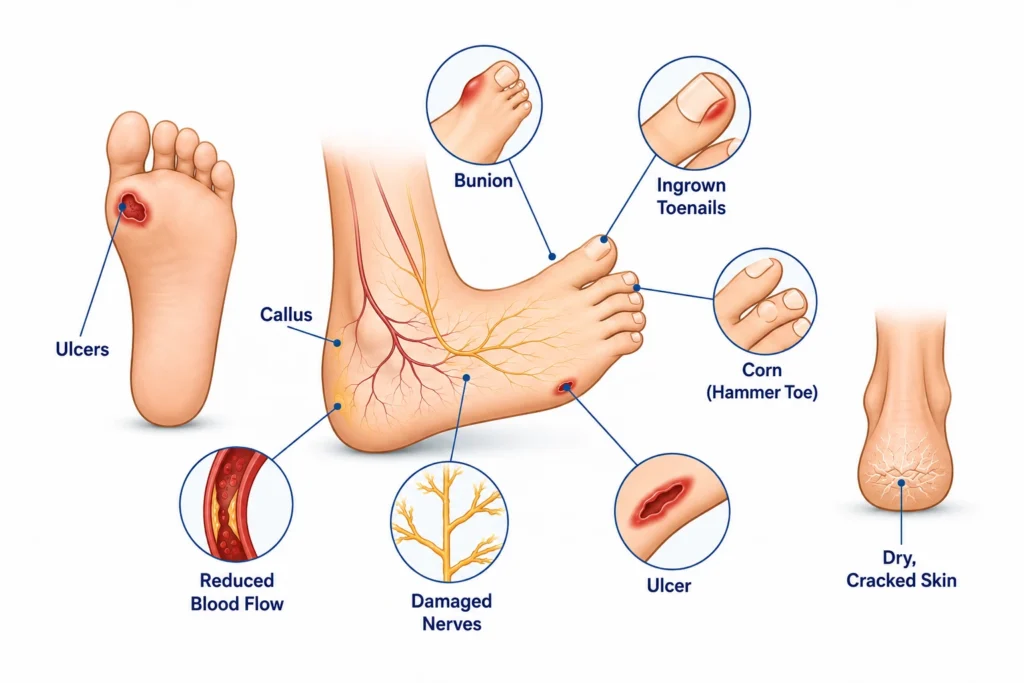

Common Symptoms of Diabetic Foot
Foot symptoms should never be ignored in patients with diabetes.
- Numbness or reduced feeling in feet
- Burning or tingling sensation
- Slow healing wounds
- Swelling or redness
- Cold feet or poor circulation
- Foot pain while walking
- Cracks, blisters, or ulcers
- Change in skin color or foot shape
Early symptoms may look small, but they can become serious if diabetes is uncontrolled.
Main Causes of Diabetic Foot Problems
The two main causes are nerve damage and poor blood flow. Nerve damage can reduce pain sensation, while poor circulation can delay healing.
Risk may increase with:
- Uncontrolled blood sugar
- Long duration of diabetes
- Diabetic neuropathy
- Diabetic vascular disease
- High blood pressure
- Smoking
- Poor footwear
- Previous foot ulcer or wound

Diabetic Foot Stages
Diabetic foot problems may progress gradually. Recognizing changes early can help prevent serious outcomes.
- Early risk stage where numbness, dry skin, or poor sensation may begin
- Wound stage where cuts, blisters, or ulcers may appear
- Infection stage where redness, swelling, discharge, or pain may develop
- Advanced stage where deep infection, tissue damage, or circulation problems may require urgent care
Patients with diabetes should get foot changes checked early instead of waiting for pain.
Diabetic Foot Treatment Approach
Treatment depends on the cause and severity. The first goal is to control diabetes, protect the foot, improve healing, and prevent infection.
A care plan may include:
- Blood sugar and HbA1c review
- Foot examination
- Wound risk assessment
- Circulation and nerve assessment
- Medication adjustment for diabetes control
- Wound care guidance when needed
- Referral to a foot surgeon or podiatrist if advanced care is required
Daily Foot Care for Diabetic Patients
Daily foot care can reduce the risk of ulcers and infections.
- Check your feet every day
- Look for cuts, redness, swelling, or blisters
- Wash feet with lukewarm water
- Dry carefully between toes
- Avoid walking barefoot
- Wear comfortable footwear
- Do not ignore wounds or discharge
If feeling in the feet is reduced, use a mirror or ask someone to help check the bottom of the feet.
Foods and Lifestyle Support
Food does not directly cure diabetic foot, but better sugar control supports healing and reduces complication risk.
Patients are usually advised to reduce sugary drinks, excess sweets, refined flour foods, fried foods, and highly processed snacks. A balanced diet with controlled portions, protein, vegetables, and regular meal timing can support better diabetes control.
When Should You Visit a Doctor?
You should visit a doctor if you have diabetes with foot numbness, burning, wounds, swelling, redness, color changes, discharge, or pain while walking.
A consultation with Dr. Rizwan Niazi in DHA Lahore can help assess your sugar control, nerve health, circulation risk, and foot safety before the problem becomes more serious.
Noticing foot changes with diabetes? Book a consultation for proper diabetic foot assessment and prevention guidance.
Why Choose Dr. Rizwan Niazi for Diabetic Foot Care?
Diabetic foot problems need more than wound care. They need proper diabetes control, nerve assessment, circulation review, and long term prevention planning.
- Experienced endocrinologist and diabetologist
- Focus on diabetes complication prevention
- Assessment of sugar control, nerves, and circulation risk
- Clinic located in DHA Lahore
Visit the Clinic or Book a Consultation
If you have diabetes and notice foot wounds, numbness, burning, or slow healing, do not delay assessment.
You can visit the clinic in DHA Lahore for diabetic foot evaluation and diabetes care planning.
Call or WhatsApp: +92 300 6088807
Frequently Ask Questions
Which injection is best for weight loss in Pakistan?
The best injection depends on your medical condition. A doctor evaluates your health before recommending a suitable option.
How much weight can I lose with injections?
Weight loss varies, but patients usually experience gradual and steady results over time with proper diet and treatment.
Are weight loss injections safe?
They can be safe when prescribed and monitored by a qualified doctor.
How often are weight loss injections taken?
Some injections are taken weekly, while others may be daily depending on the type.
Do I need a prescription for weight loss injections?
Yes, these injections should only be used under medical supervision.
Can I lose 10 kg in 2 months?
Some patients may lose significant weight depending on the dose, diet control, and consistency, but results vary.